
Five lessons from SCALE K-12: Building a workforce for emerging industries
26 June 2026
How do you build a workforce for an emerging industry? According to Professor Tamara Moore, you start with education in the early years.
Tamara speaks from experience. She leads the SCALE K–12 program, a US education initiative designed to build a future talent pipeline for the semiconductor and microelectronics industry. This program is aligned with the broad goals of the $280 billion US CHIPS and Science Act, which aims to strengthen domestic semiconductor research, manufacturing and workforce capability.
The need for a future workforce is urgent. Especially when the US semiconductor industry is projected to need nearly 115,000 additional workers by 2030, with estimates suggesting that around 67,000 of these roles could go unfilled without further action.
During her visit as our first COMBS Fellow, Tamara shared what she learnt from building educational pathways for an emerging technology sector – and what Australia might take from this model.
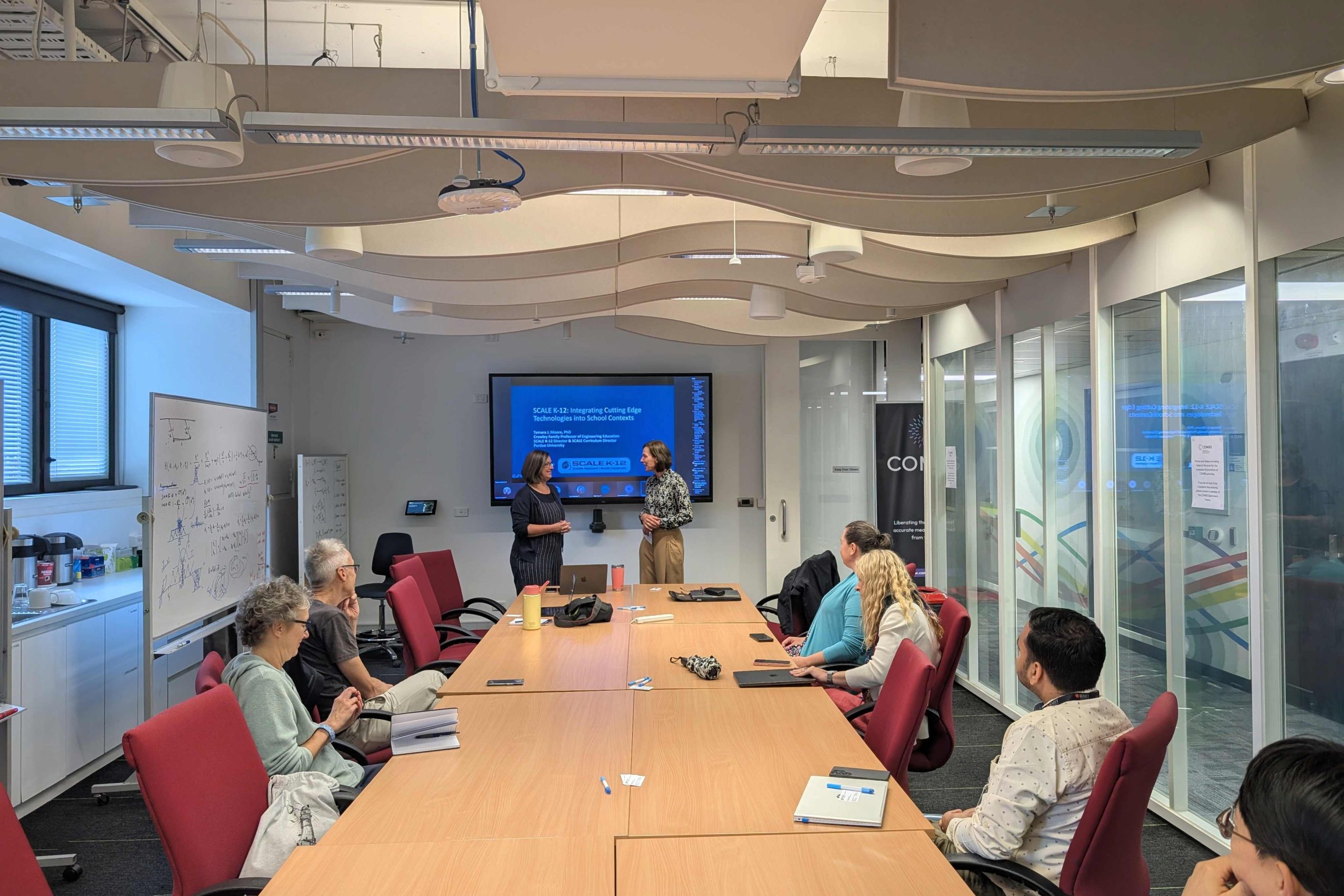
Tamara delivering a hybrid presentation on the Scale K-12 program to COMBS members.
The parallel with COMBS
Building a workforce for an emerging industry is also central to our work at COMBS.
Our Centre is working to make optical frequency combs – some of the world’s most accurate measurement tools – smaller, cheaper and as accessible as everyday consumer electronics. Currently, these tools are the size of a fridge and cost around $1M AUD.
But working on the technology isn’t enough. If we want optical frequency comb technologies to be adopted widely, we need to start creating our ecosystem of schools, universities and the public now.
So what does it take to build a workforce around an emerging technology before the industry fully exists? And where should we, at COMBS in Australia, begin?
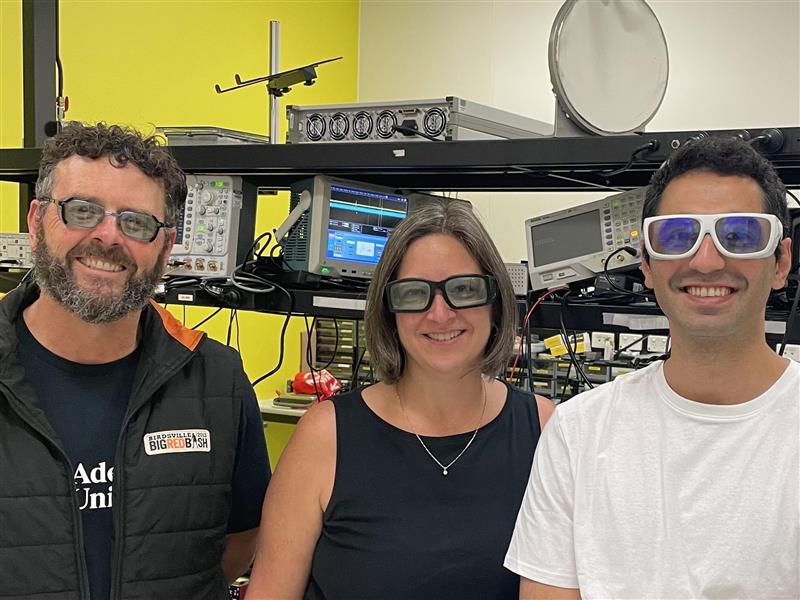
Tamara visiting different COMBS nodes across Australia. This picture was taken in the Adelaide University node with Chief Investigator David Lancaster and PhD candidate Kawa Kurdistan
Here are five things we learnt from Professor Tamara Moore, that could be directly applied to building Australia’s future STEM workforce.
1. Start early and embed science from the beginning
Children often disengage from science early. Once they get the idea that “science is hard” or “science is not for girls” it can be difficult to shift.
The SCALE K-12 Program embeds its learning from starting from the first year of primary school all the way through high school – and embeds electronics into every subject ranging from STEM subjects to English, art and more.
The Program is based on creating client briefs that invite children to develop innovative solutions to engineering problems using engineering design.
The key insight is simple: if you want future engineers, start before students decide they’re “not science people.”
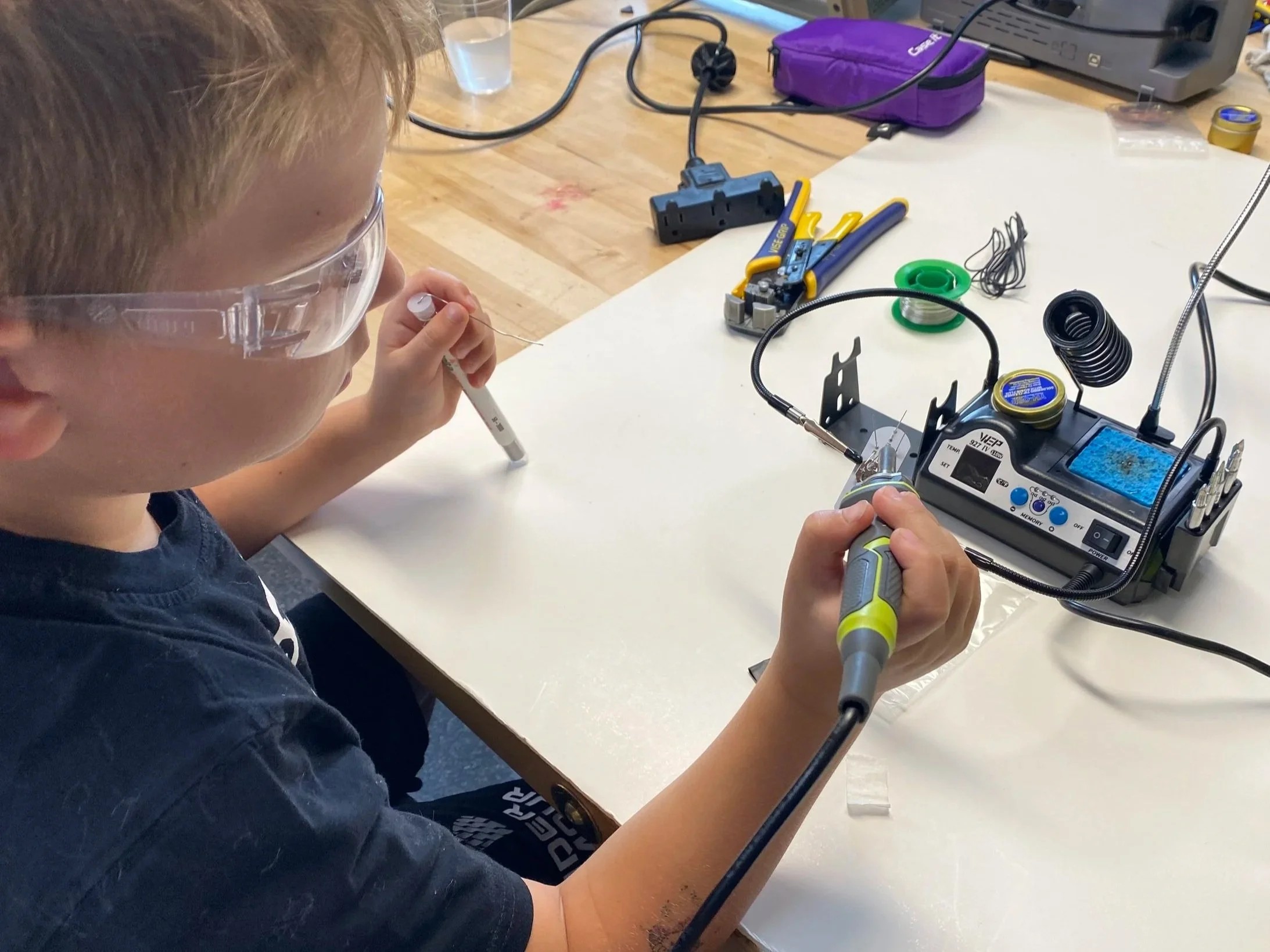
Student working with soldering
2. Ground student learning in local communities
Students are far more likely to engage if learning feels relevant to where they live and what matters to them.
The SCALE K-12 Program intentionally connects to the local context of Indiana and its specific manufacturing capabilities – from chip packaging to secure hardware as examples.
Being able to see the industry and the actual sites where this work happens helps students connect abstract STEM concepts with real jobs, workplaces and people in their own communities.
This grounding also encourages students to see a future version of themselves in their own locality, linking STEM to identity, place and pride.
3. Create repeated touch points across a student’s pathway
A single event or classroom visit rarely changes a person’s career aspirations or trajectory.
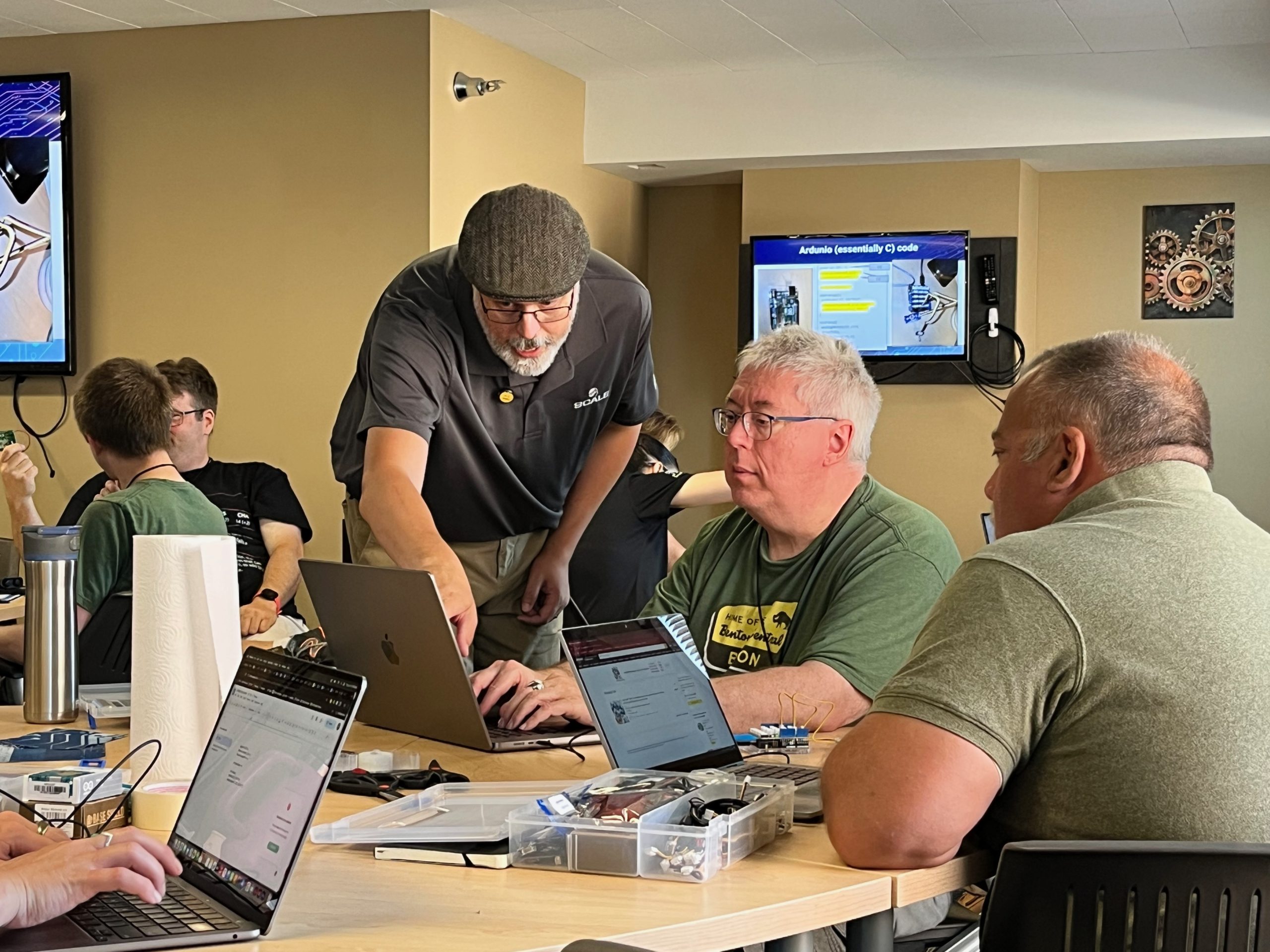
Instead, the SCALE K-12 Program maps a long thread – with repeated ‘touch points’ – so a student should encounter microelectronics in every grade from primary school through to the end of high school before making a decision about what to study at University.
These touchpoints might be in the form of a high school module, a field trip, a classroom speaker, or a Summer program – each reinforcing a message that a career in microelectronics is real, accessible and available.
Every time a student encounters the thread, it is a reminder that ‘this is significant’ for me, for my community.
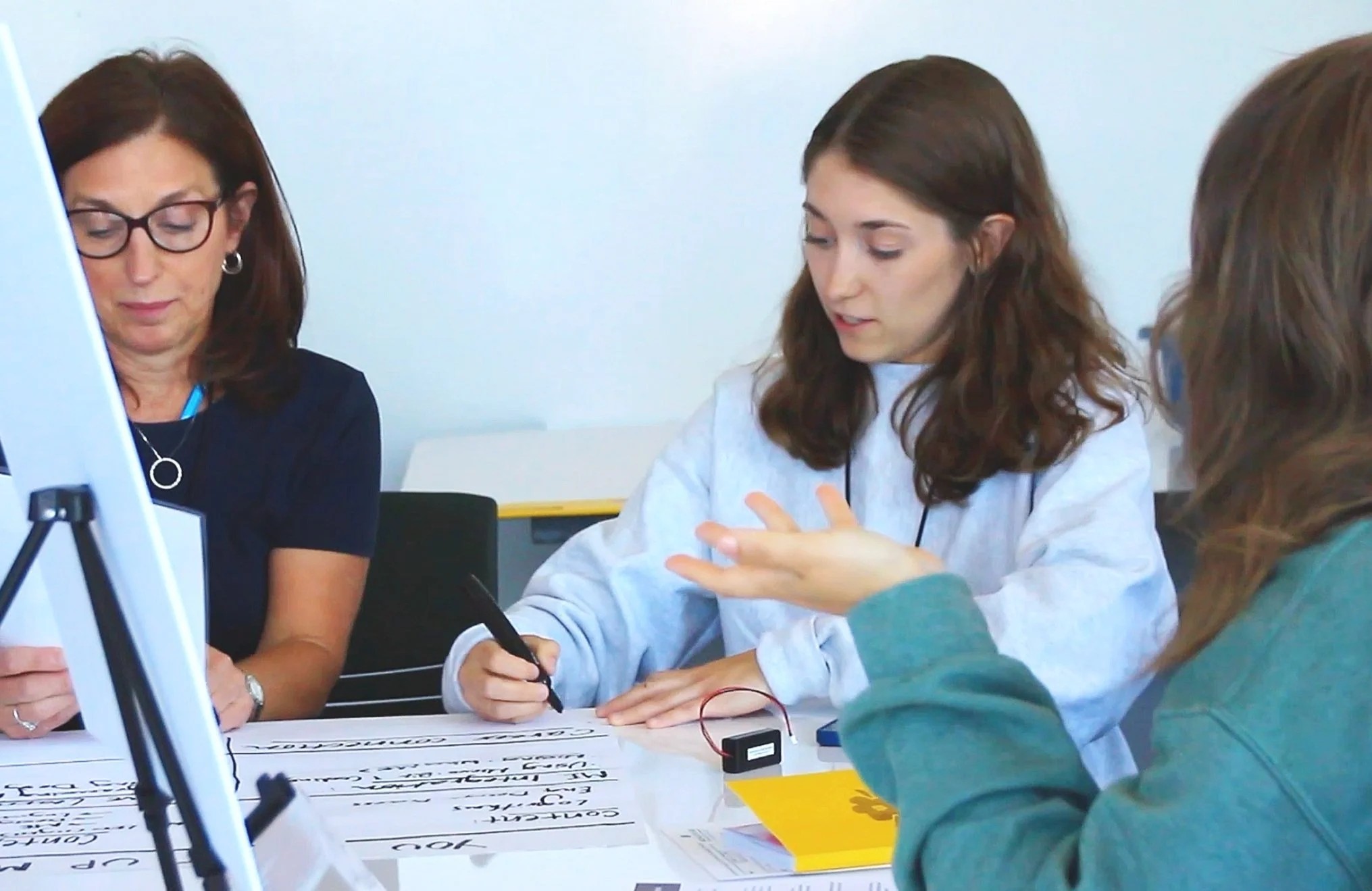
4. Invest in teacher learning and include them in the design
No workforce is built without the effort of teachers.
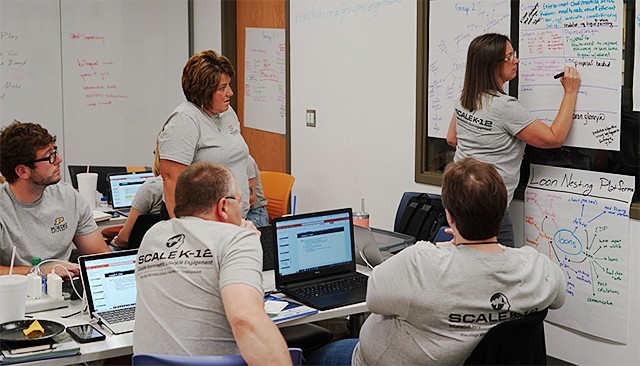
The SCALE K-12 Program deliberately funds and prioritises teacher professional development, including paid summer learning programs focused on microelectronics.
This support is critical for time-poor teachers to prioritise their own professional development.
Providing structured, paid opportunities acknowledges teachers’ central role in shaping student future aspirations and career choices.
Importantly, this highlights the multiplier effect: upskilling one teacher has the potential to influence hundreds of children in many classrooms, resulting in impact far beyond the initial investment.
5. Help interested students keep learning in their own time
Workforce development does not only happen in classrooms.
Digital tools not only massively expand access but provide engaged students with a way to keep the emerging industry front of mind.
The SCALE K-12 program’s ‘Chip Kids’ YouTube series has built a large audience (now with 2,500+ followers) which acts as both an educational resource and an ongoing point of engagement.
This ensures the students even outside the SCALE K-12 program schools can still be exposed to emerging ideas in micro-electronics. It also reinforces learning for students within the program, promoting continuity across platforms and touchpoints.
Enabling self-driven discovery is a way to make sure people can follow up in their own time.
Taken together, these strategies show that workforce development is not a single intervention, it is an ecosystem. It requires coordination across schools, universities, industry, teachers, and digital platforms, all reinforcing the same narrative over time.
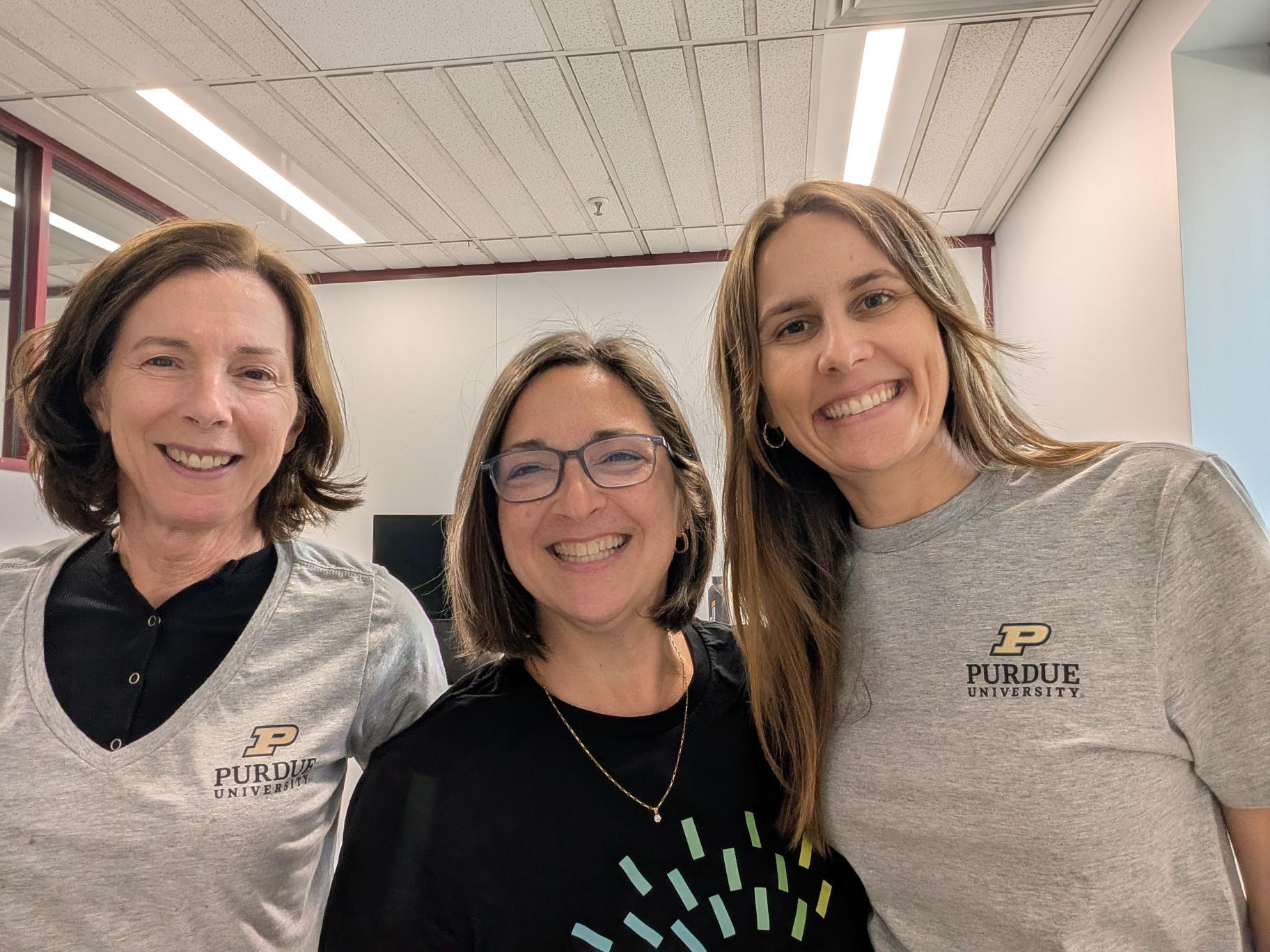
COMBS Associate Investigator Amanda Berry, Professor Tamara Moore and COMBS Science Communicator Rachael Vorwerk doing a 't-shirt exchange' with Purdue University and COMBS.
Key takeaways
Taken together, these lessons show that workforce development is not a single intervention. It’s an ecosystem.
It requires coordination across schools, universities, industry, teachers, researchers and digital platforms, all reinforcing the same narrative over time.
For emerging fields such as photonics and optical frequency comb technology, this work is especially important. Today’s research must be connected to tomorrow’s technology – and tomorrow’s workforce.
At COMBS – and anyone else building a workforce for an emerging industry – we see this work as a core infrastructure for innovation.
If we want optical frequency technologies to become widely adopted, we need to begin building the people, pathways and public understanding around them now.