
PhD Project: Inertial sensing with optical frequency combs for resilient navigation
About the role
Lead University: Swinburne University
Primary Supervisor: Prof. Allison Kealy (Swinburne University)
Co-Supervisors: Dr Chathura Bandutunga (Australia National University), Dr Scott Foster (DSTG)
Project Partner: Defence Science and Technology Group (DSTG)
PhD stipend: AUD$41,555 per/annum + $5,000 per/annum top up
The candidate can be based in Melbourne or Canberra.
The project
This project explores how optical microcombs, tiny chip-scale devices that generate highly stable, precisely spaced frequencies of light, can be used to create a new class of high-performance optical gyroscopes.
Gyroscopes are critical sensors for navigation, allowing aircraft, spacecraft, autonomous vehicles, and defence platforms to determine orientation and movement without relying on external signals such as GPS.
Current state-of-the-art gyroscopes capable of navigation-grade performance are typically large, expensive, and power-hungry, while smaller micro-electro-mechanical systems (MEMS) devices are compact and affordable but limited in sensitivity and long-term stability.
This project aims to bridge that gap by developing a coherent optical source based on microcomb technology that can drive a compact gyroscope with sensitivity approaching, or potentially exceeding, navigation-grade performance.
The candidate will investigate how the exceptional coherence, stability, and precision of microcomb light sources can improve gyroscope sensitivity, reduce noise, and enable robust operation in challenging environments.
This work could unlock a new generation of compact, resilient navigation sensors for autonomous systems, defence applications, robotics, and space systems, helping deliver precise positioning and navigation where satellite signals are unavailable or unreliable.
Eligibility criteria
- The candidate should have first-class honours equivalent (or above) in Physics, Photonics, Electrical Engineering, Applied Mathematics, or a related discipline, with strong interest in optics, sensing systems, and experimental technology development.
- Experience in photonics, signal processing, or instrumentation would be advantageous.
- Meet all Swinburne PhD eligibility requirements: www.swinburne.edu.au/courses/applying/how-to-apply-research-degree/entry-requirements/
COMBS is committed to achieving gender equity and strongly encourages applications from women and women identifying candidates.
Why do a PhD with us at COMBS?
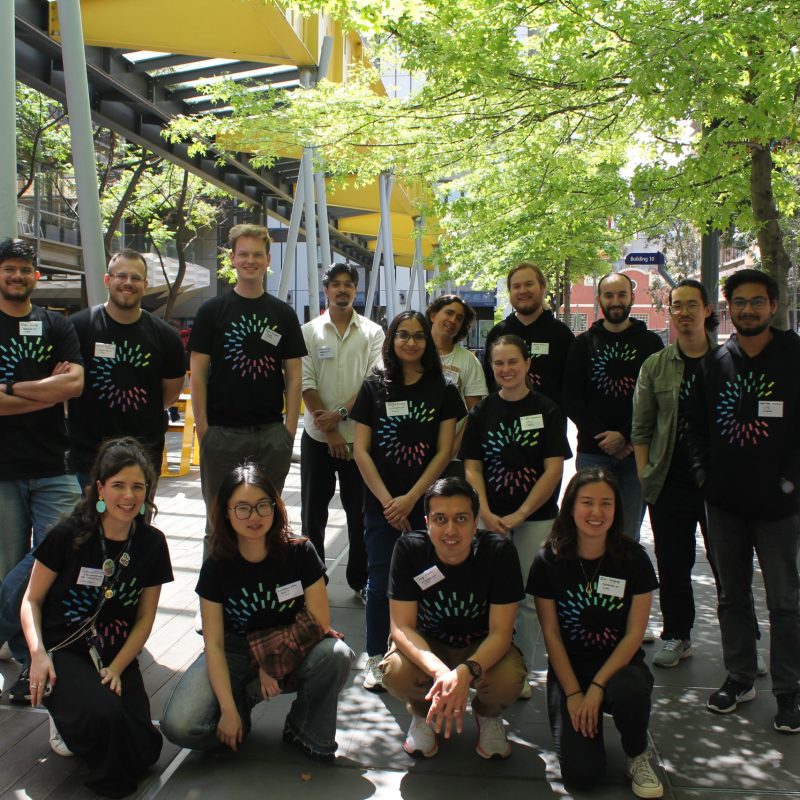
Competitive tax-free stipend
The Australian Research Council Centre of Excellence rate is (AUD$41,555 p/a) + $5,000 p/a top up
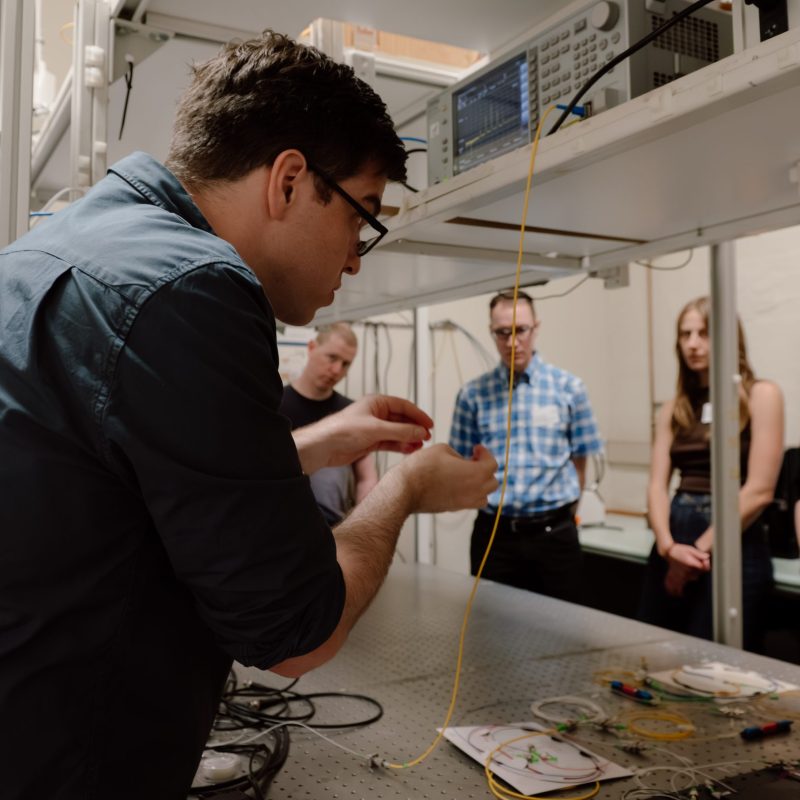
Be a part of our global network
Opportunities for industry internships.
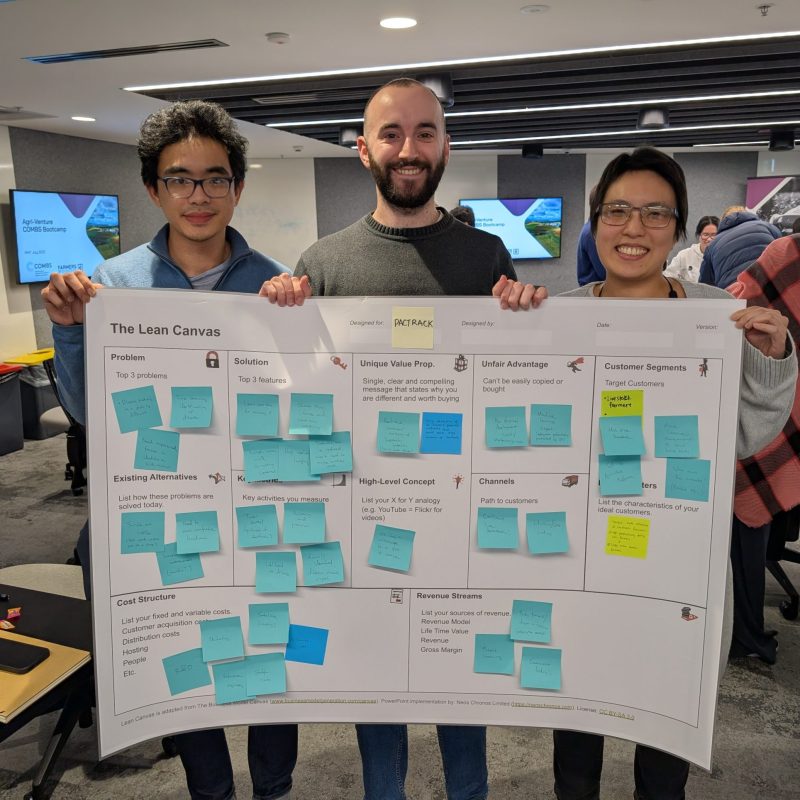
Get prepared with real-world skills
Opportunities to apply for internal grant schemes to upskill.
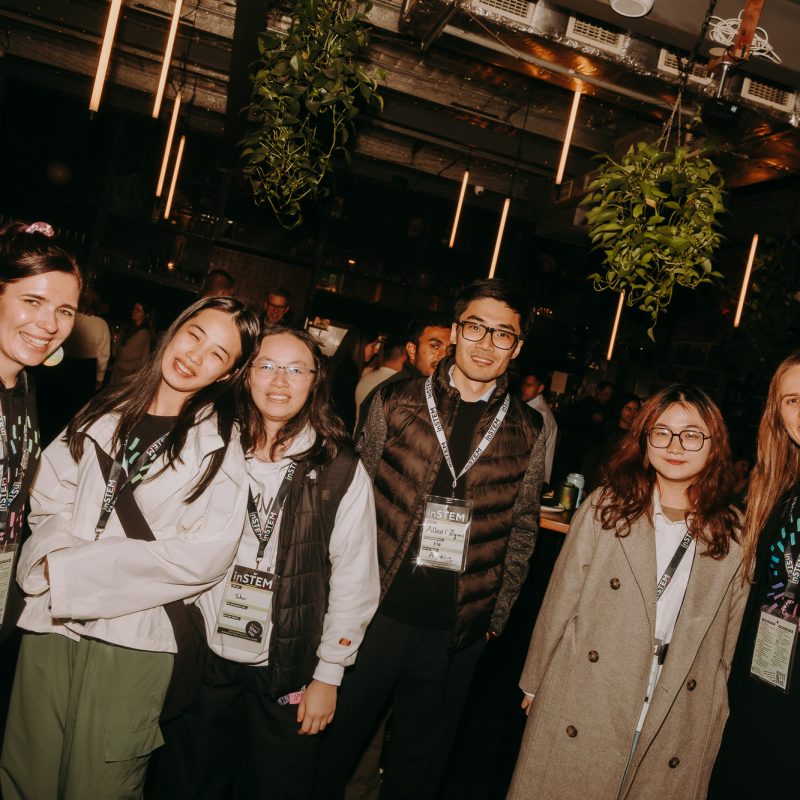
Attend events to build your network
Supported attendance at COMBS events like the Annual Centre Workshop, theme workshops and PhD network events.
How to apply
Please use the link below to submit your application.
Valid applications must:
- Be submitted using the application portal (applications will not be accepted via email)
- Include valid data for all required fields in the application form
- Include a cover letter (maximum one page) that includes:
- Your educational/professional experience that is relevant to the specific project you are applying for,
- Why you are interested in the specific project and pursuing a PhD in COMBS, and
- Any other information you think is relevant to your application.
- Meet all Swinburne University PhD eligibility requirements: www.swinburne.edu.au/courses/applying/how-to-apply-research-degree/entry-requirements/
Please note: You can apply for more than one PhD project by submitting a separate application for each project you intend to apply for in the form below.

What happens after I apply?
Once you have submitted your application you will receive an email confirmation as evidence that we have received it.
After the project application window has closed, all applications will be reviewed and a shortlist selected for interviews.
If you are successfully shortlisted, you will be contacted to arrange an interview.
NOTE: If you are unsuccessful in being shortlisted, you will still be contacted with this information so please avoid contacting us for updates on the status of your application.
Should you be offered the project after your interview, you will be required to apply for enrolment in a PhD program at the relevant university. Your successful enrolment will be dependent on meeting the university’s eligibility requirements so it is essential that you check these before applying with us to avoid disappointment.
The team you'll be joining

Professor Allison Kealy
Allison is a Professor specialising in Geodesy and resilient positioning, navigation, and timing, with the aim of developing more resilient navigation systems that can operate without dependency on satellite signals.

Dr Chathura Bandutunga
Chathura is developing fibre optic metrology architectures using high speed real-time digital signal processing.

Dr Scott Foster
Scott is the Program Lead of Quantum Technologies at DSTG and will help to identify additional avenues for commercialisation and impact in Australia.
Our culture at COMBS
We value gender equality, equity, diversity, inclusion, and access, and we recognise the importance of intersectionality.
We are committed to creating an environment that embraces and harnesses these intersections to do the best science we can.
We invite you to join us to become part of our diverse and inclusive COMBS community.
Hear from others who have done a PhD at a Centre of Excellence
Read about your future teams' research
Frequently Asked Questions (FAQs)
Yes, but you must submit a separate application for each project you intend to apply for.
The cover letter should highlight:
- Your educational/professional experience that is relevant to the specific project you are applying for,
- Why you are interested in the specific project and pursuing a PhD in COMBS, and
- Any other information you think is relevant to your application.
Each university has their own English requirements so you must check the relevant university’s website for details (linked with each project description above).
Visa approval times vary but will usually be completed within 2-3 months. You can check the current estimated approval time on this website (search for Student visa (subclass 500)): https://immi.homeaffairs.gov.au/visas/getting-a-visa/visa-processing-times/global-visa-processing-times