
High school student enrolment in physics is declining. Our COMBS education program aims to change that.
From safe transport and medical imaging to the technology in our pockets, physics underpins much of our modern life. Our Centre is building the next generation of physicists to advance it – and shape a more sustainable future.
The challenge
High school physics enrolments are in decline
The number of physics students and teachers in Australia is falling. According to the Australian Mathematical Sciences Institute and the Australian Institute of Physics, the proportion of students studying senior physics dropped from 14.9% in 2015 to 12.1% in 2023.
This decline is influenced by a range of factors including perceived subject difficulty and a lack of connection to students’ everyday lives.
How much does a physics education shortage matter? Physics underpins the technologies we rely on – and without a strong next generation of physicists, our ability to maintain and advance these systems in a sustainable way is at risk.
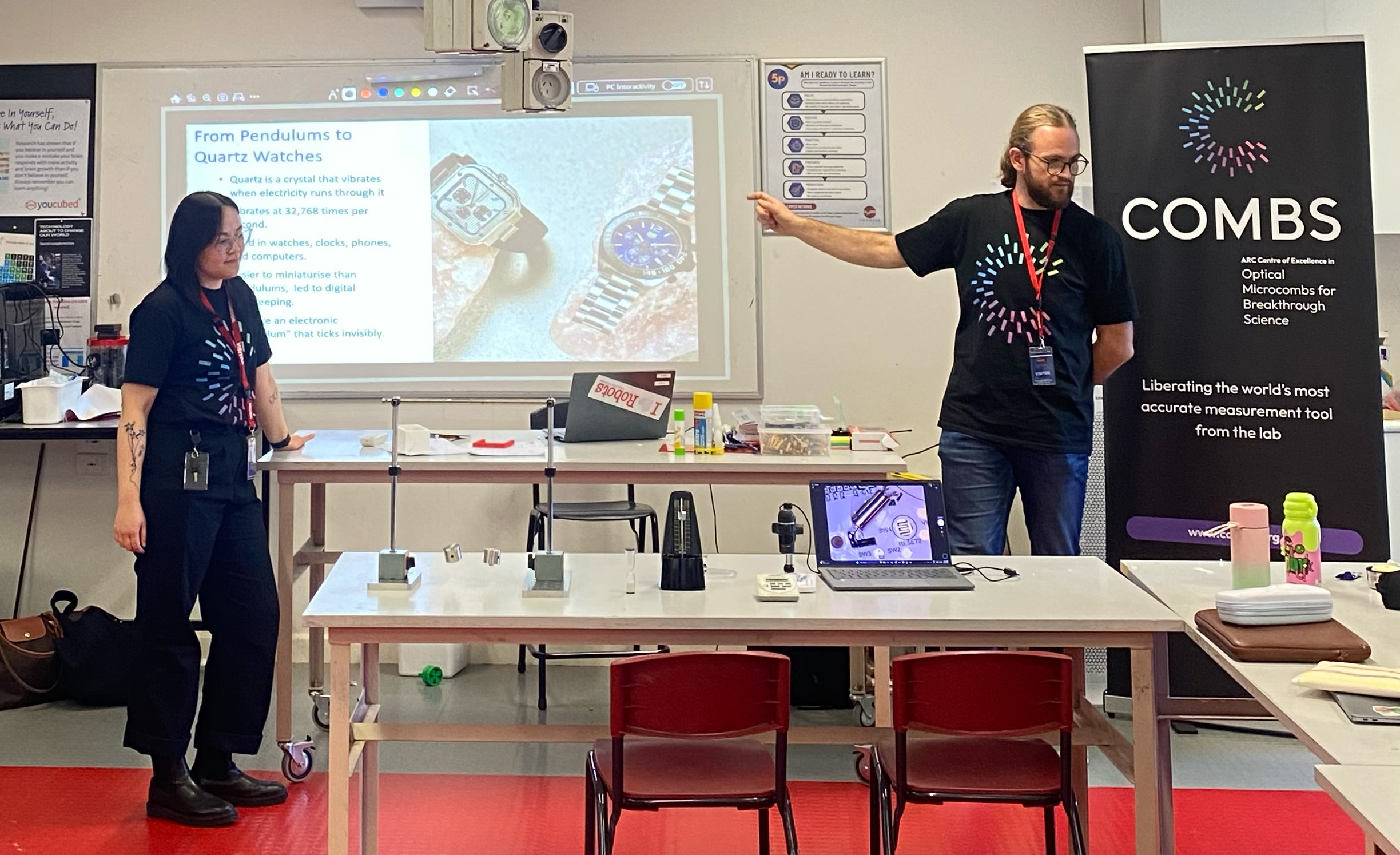
Peter Thurgood and Sonya Palmer showing Viewbank College students how physics can be used in the real world.
Our response
Making physics accessible in schools
To show how physics applies in the real world and what a career pathway in physics can look like, our COMBS Centre ran a 6-week lunchtime pilot program with 28 students from year 7-9 at Viewbank College in Melbourne’s east.
We co-designed the program with six of our COMBS PhD students and Postdoctoral researchers, aligning it with the Victorian Curriculum and connecting with students’ interests
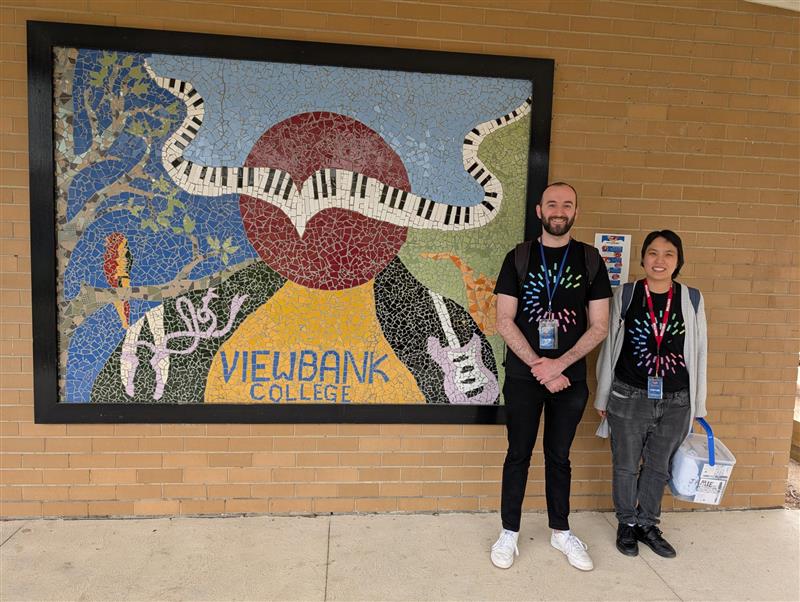
Jamie Low and Evan Diamandikos at Viewbank College.
The results
Students have a higher confidence and interest in physics
Each week of the program aimed to show how physics underpins real-world applications and to appeal to a broad range of students.
Activities included:
- Experimenting with a ‘sensing smorgasbord’ to show how COVID-19 rapid antigen tests work
- Sunburning ultraviolet (UV) activated paper to explore how light is used to make photonic microchips found in smart phones
- Seeing how clean room jackets look under the microscope – to show the high-level of precision and cleanliness required in manufacturing
- Understanding the evolution of timekeeping – from sand clocks to smart phone timers – to highlight precision timekeeping in GPS and banking
Post-program survey results showed that students:
- Reported a greater understanding of physics in everyday life
- Felt less intimidated by physics
- Gained a better understanding of physics career pathways
COMBS is now repackaging this program for schools across Australia.
If you are a teacher interested in trialling this program, please contact info@combs.org.au.
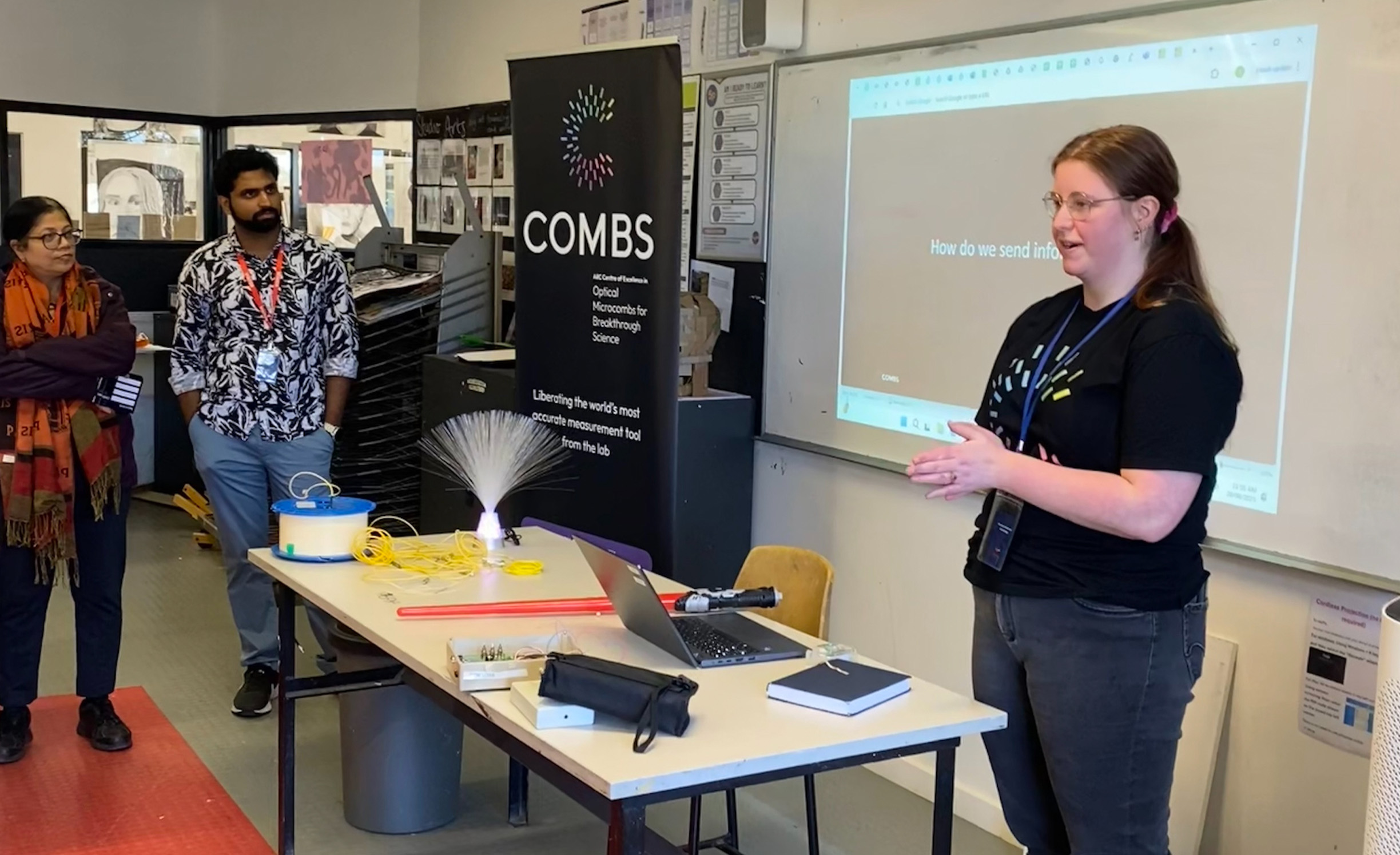
Caitlin Murray - along with Jackson Jacob Chakkoria and our Viewbank College teacher Veena Nair - explaining how we send information via the internet to Viewbank College students.
Team
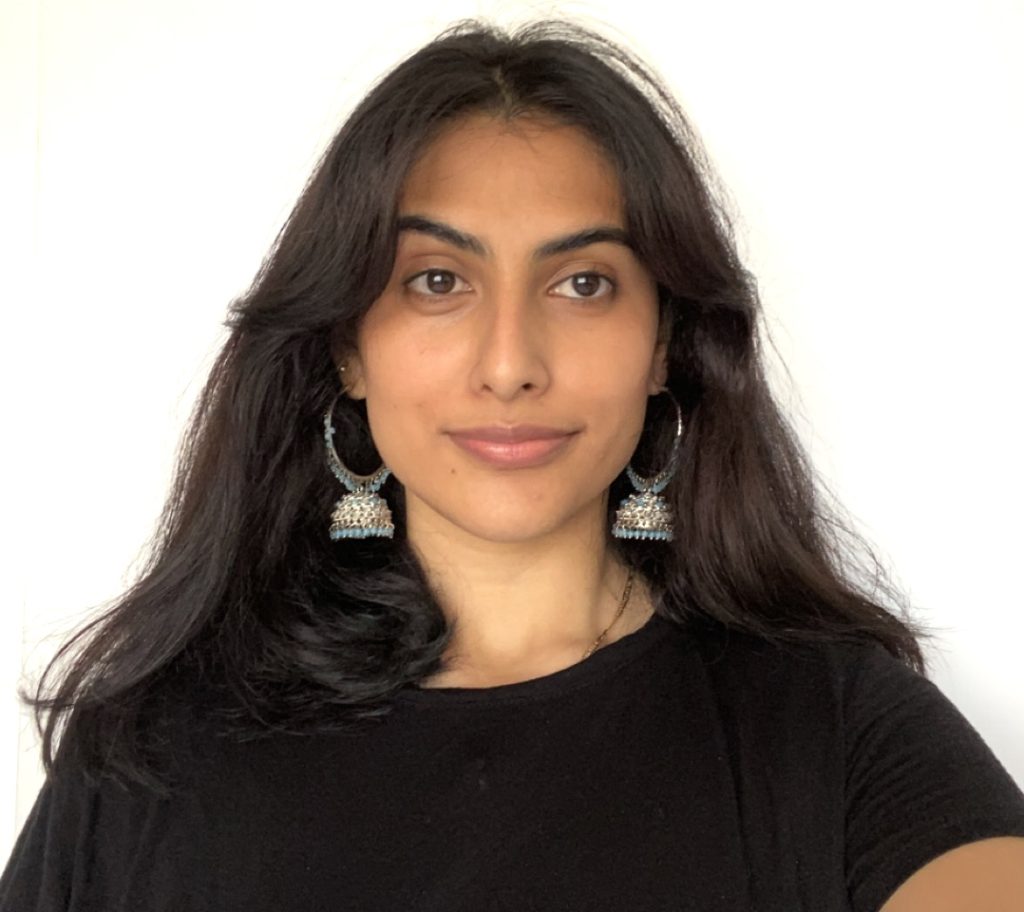
Ms Prina Bhugwan
Prina is a PhD Student at RMIT University. She is conducting a PhD investigating how frontier, COMBS science can be integrated into classrooms through culturally responsive pedagogy.

Professor Amanda Berry
Amanda is a Professor in STEM Education, a passionate advocate for engaging the interest of, participation in, and success of all young people in STEM fields.
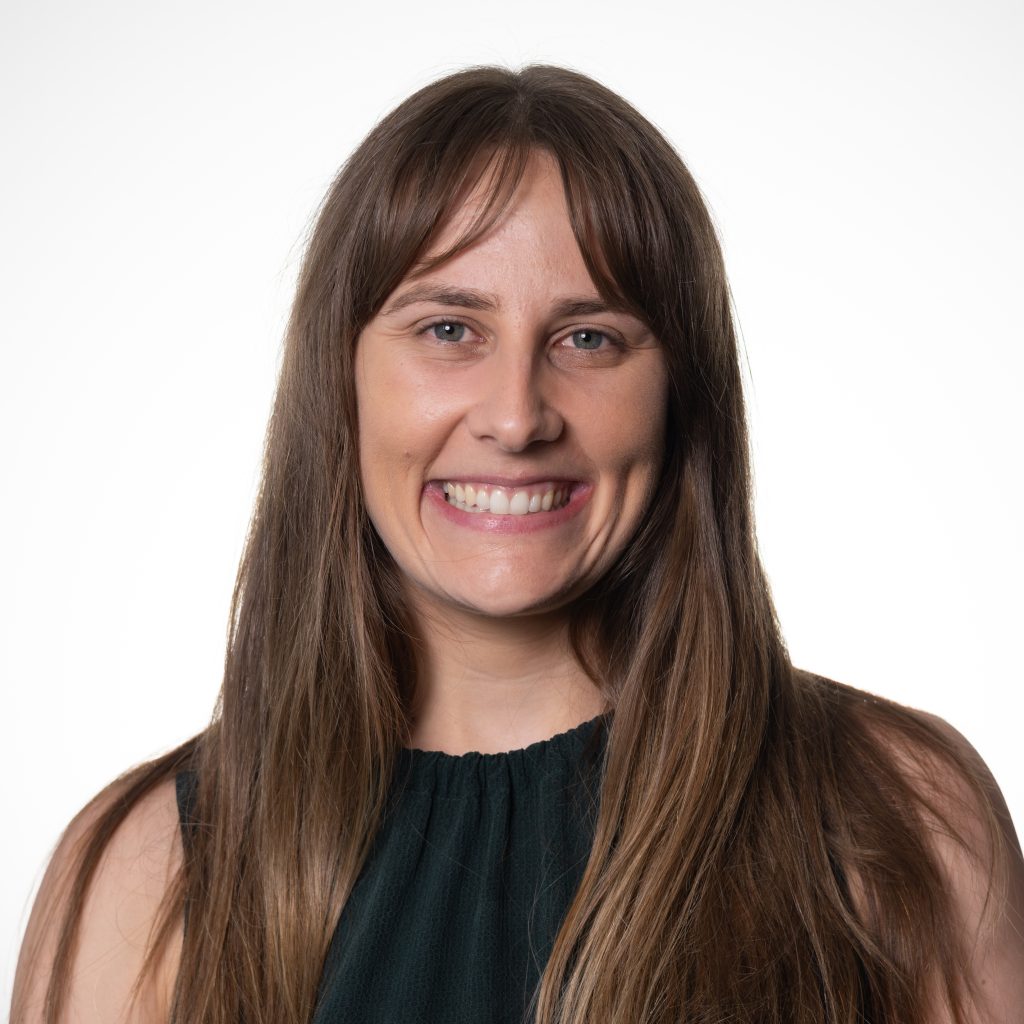
Rachael Vorwerk
Rachael manages the science communication, internal communications, branding, education and outreach at the Australian Research Council Centre of Excellence in Optical Microcombs for Breakthrough Science (COMBS).
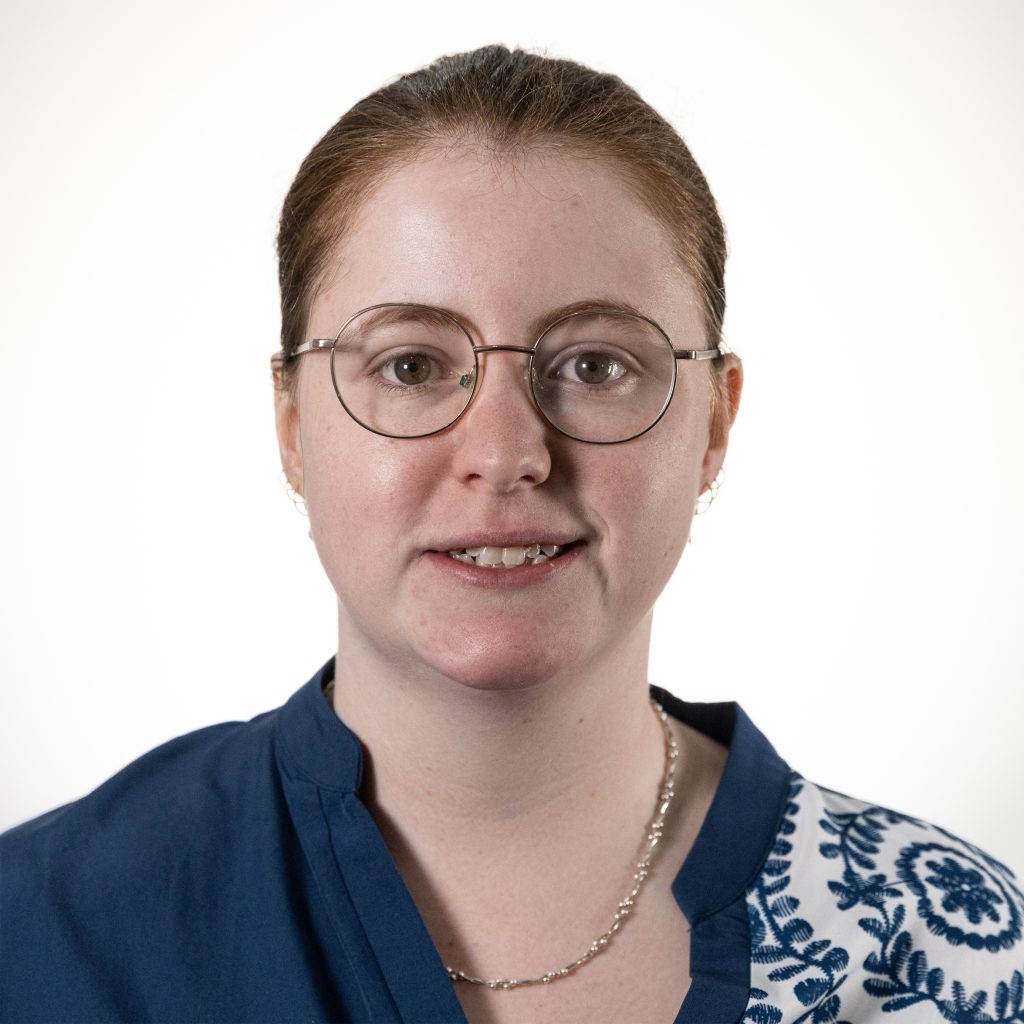
Ms Caitlin Murray
Caitlin is a PhD student at Monash University’s Department of Electrical and Computer Systems Engineering

Mr Jackson (Jack) Chakkoria
Jack is researching frequency converters that have the potential to meet future high-speed communication needs while minimising energy consumption, cost, and size with the photonic integrated circuit technology.

Mr Evan Diamandikos
Evan is a PhD Student at RMIT University. He works on the Science and Technology theme.
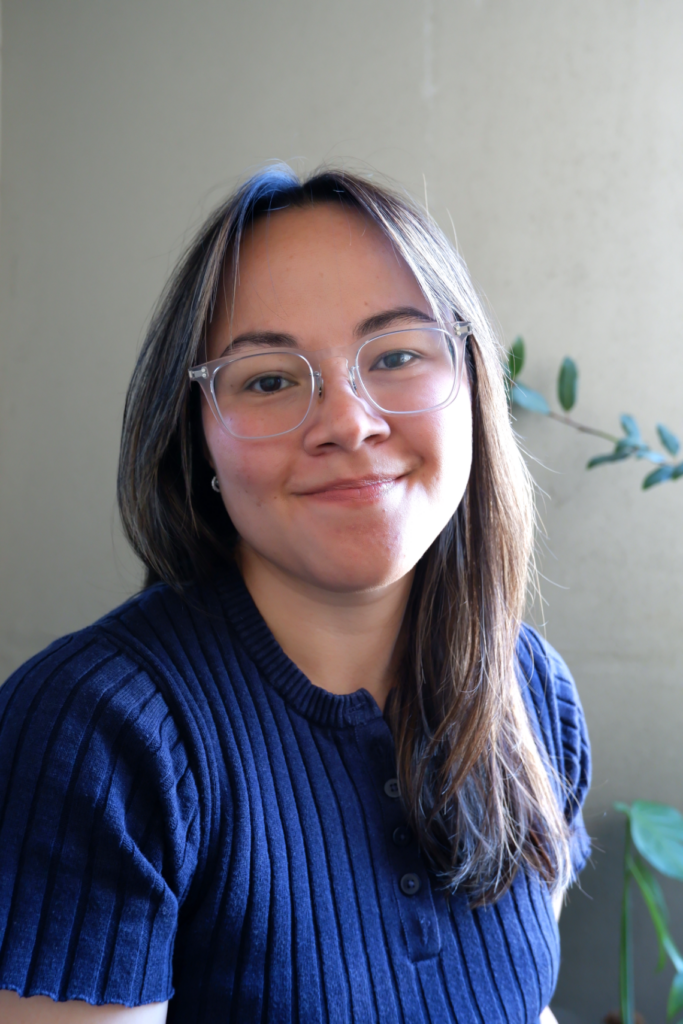
Dr Sonya Palmer
Sonya is a Postdoctoral Researcher at the Australian Research Council (ARC) Training Centre for Current and Emergent Quantum Technologies.

Dr Jamie Low
Jamie is a member of research staff at RMIT University. They work on the Sensing and Measurement and Science and Technology themes.

Dr Peter Thurgood
Peter is a member of research staff at RMIT University. He works on the Sensing and Measurement and Science and Technology themes.