Five surprising things light can do – and how microcombs push it further

We use light every day. We see with it. We feel it as heat. We use it to send messages, scan our bodies, study the stars and measure time with extraordinary precision.
But light does much more than help us read signs, take photos or find our way to the fridge at night.
It carries our internet.
It brings us ancient messages from distant planets.
It helps us see earthquakes in real-time.
It keeps time.
It can even reveal what is happening inside the human body.
At our Australian Research Council Centre of Excellence in Optical Microcombs for Breakthrough Science (COMBS), our researchers are using light in one of its most precise forms: the optical frequency comb.

An optical frequency comb turns one laser into many evenly spaced colours of light. These colours act like the teeth of a comb, creating a precise ruler made from light.
That ruler can be used to measure, transmit and understand the world in new ways.
To celebrate International Day of Light, here are five surprising things light can do – and how our COMBS researchers are using optical microcombs to push them further.
1. The internet travels in optical fibres as light

Every time you scroll, stream, search or send a message, information is racing through optical fibres as pulses of light.
But our internet is growing exponentially at 25% per year – so we need a way to keep up and send more information through the same fibres. One way to do that is to use many colours of light at once, with each colour carrying a different stream of data.
That is where optical microcombs come in.
A microcomb can create many precisely spaced colours from a single laser. Instead of sending information down one lane, it can help create many parallel lanes of light.
Our COMBS researchers and collaborators have already shown how this technology could dramatically increase internet capacity – at the rate of 44 Terabits per second, or the equivalent of sending 1,000 HD movies in a second – through a 76.6 km loop of optical fibre across eastern metropolitan Melbourne.
2. Light can give us clues about planets in other star systems
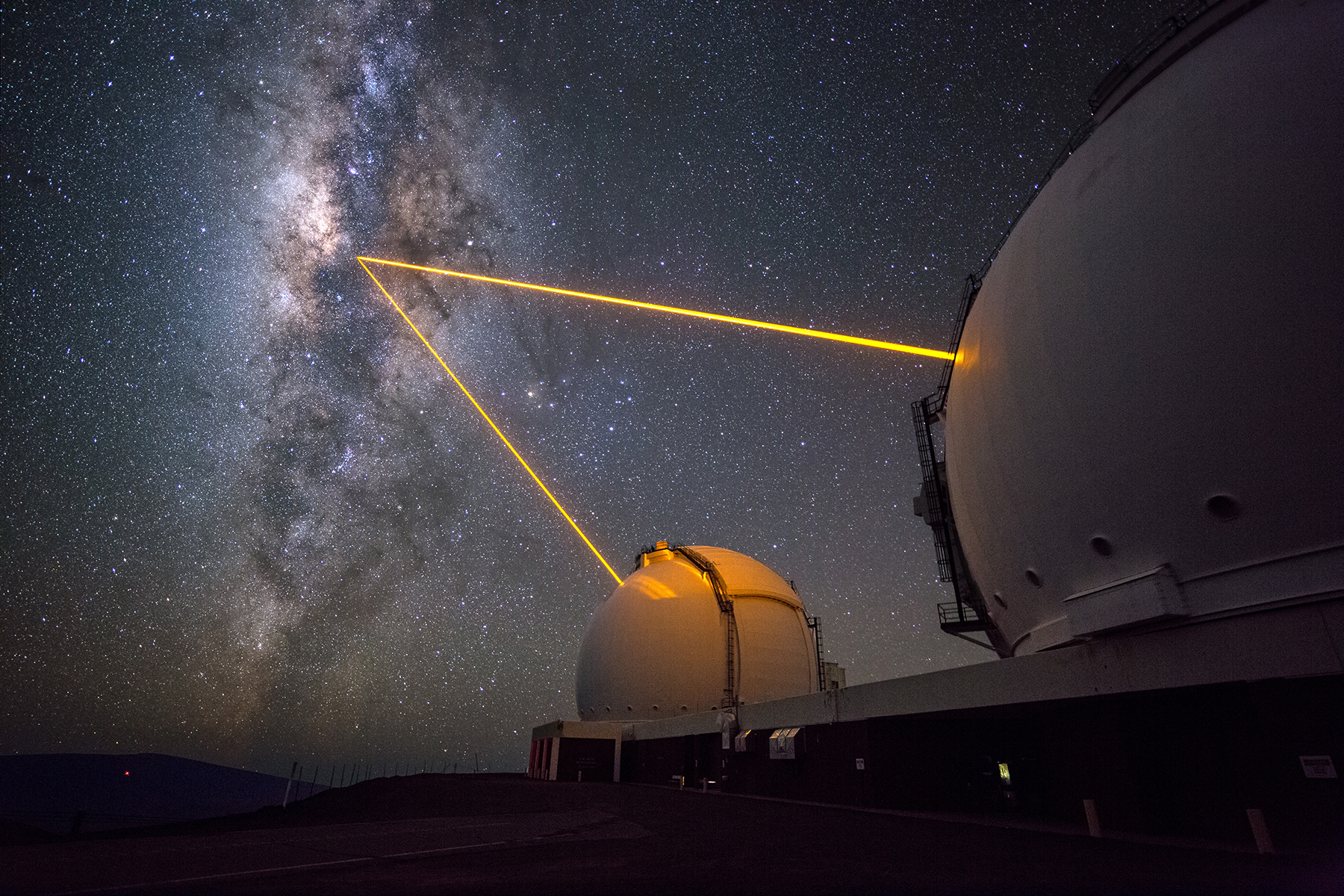
When you look at the night sky, you are looking into the past.
The light we see from the Sun is about eight minutes old.
The light from Proxima Centauri – the nearest star to Earth after the sun – is more than four years old by the time it reaches us.
Astronomers can study the colour of light to learn about planets orbiting distant stars. Tiny shifts in starlight can reveal whether a star is wobbling because a planet is pulling on it.
But those shifts are incredibly small, and go much further back than just four years (in fact, hundreds of millions of years!). To find them, astronomers need extremely precise tools.
Optical frequency combs can act like rulers for light, helping researchers measure tiny changes in starlight. COMBS researchers are working towards more reliable and compact comb technologies that could support the search for Earth-like planets.
3. Lightning can tell you how far away a storm is

You have probably heard the trick for estimating how far away a storm is: count the seconds between seeing lightning and hearing thunder.
Light travels much faster than sound, so we see the lightning before we hear the thunder. The longer the gap, the further away the storm.
That simple trick uses light and time to estimate distance.
Our COMBS researchers are using the same bigger idea – light as a measurement tool – in much more advanced ways.
By sending laser light through optical fibres and measuring how that light changes, researchers can detect vibrations and environmental changes along the fibre.
Our hope is that optical frequency combs could make these measurements even more precise.
4. The best clocks do not tick – they use light

Old clocks used swinging pendulums. Modern phones use electronic signals. The most advanced clocks use atoms and light.
Optical atomic clocks measure the vibrations of atoms using light. These vibrations happen fast and can provide an extraordinarily stable way to measure time.
But there is a challenge: optical atomic clocks operate at frequencies far beyond what everyday electronics can easily count.
Optical frequency combs help bridge that gap. They translate the precision of optical clocks into signals we can use.
Optical clocks are the most accurate way to measure a second, and they’re integral to navigation, communications, space exploration and fundamental science.
5. Light can reveal what the eye cannot see
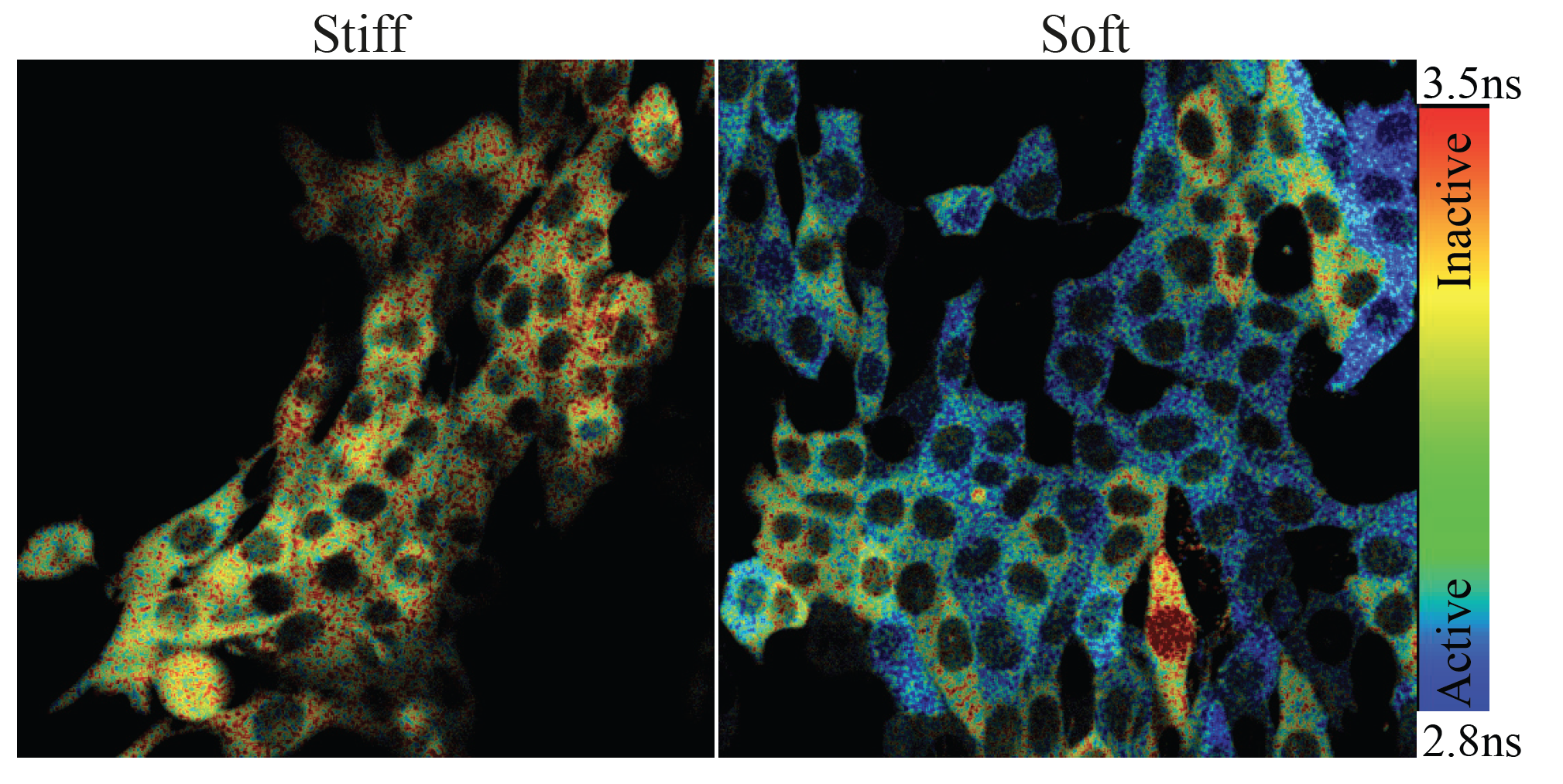
Using Brillouin microscopy to examine tumour tissue.
For centuries, scientists have used light to reveal hidden information about the world.
It can reveal what materials are made of, how chemicals behave and what is happening inside living tissue.
This is the idea behind spectroscopy – or ‘ghost watching’ as it is in Latin – studying how light interacts with matter.
Our COMBS researchers are exploring how advanced light-based tools could improve biomedical imaging, including research into triple-negative breast cancer cells.
With optical microcombs, researchers hope to speed up some imaging and analysis processes, potentially reducing processing times from hours to seconds.
The future of light is being built on a chip
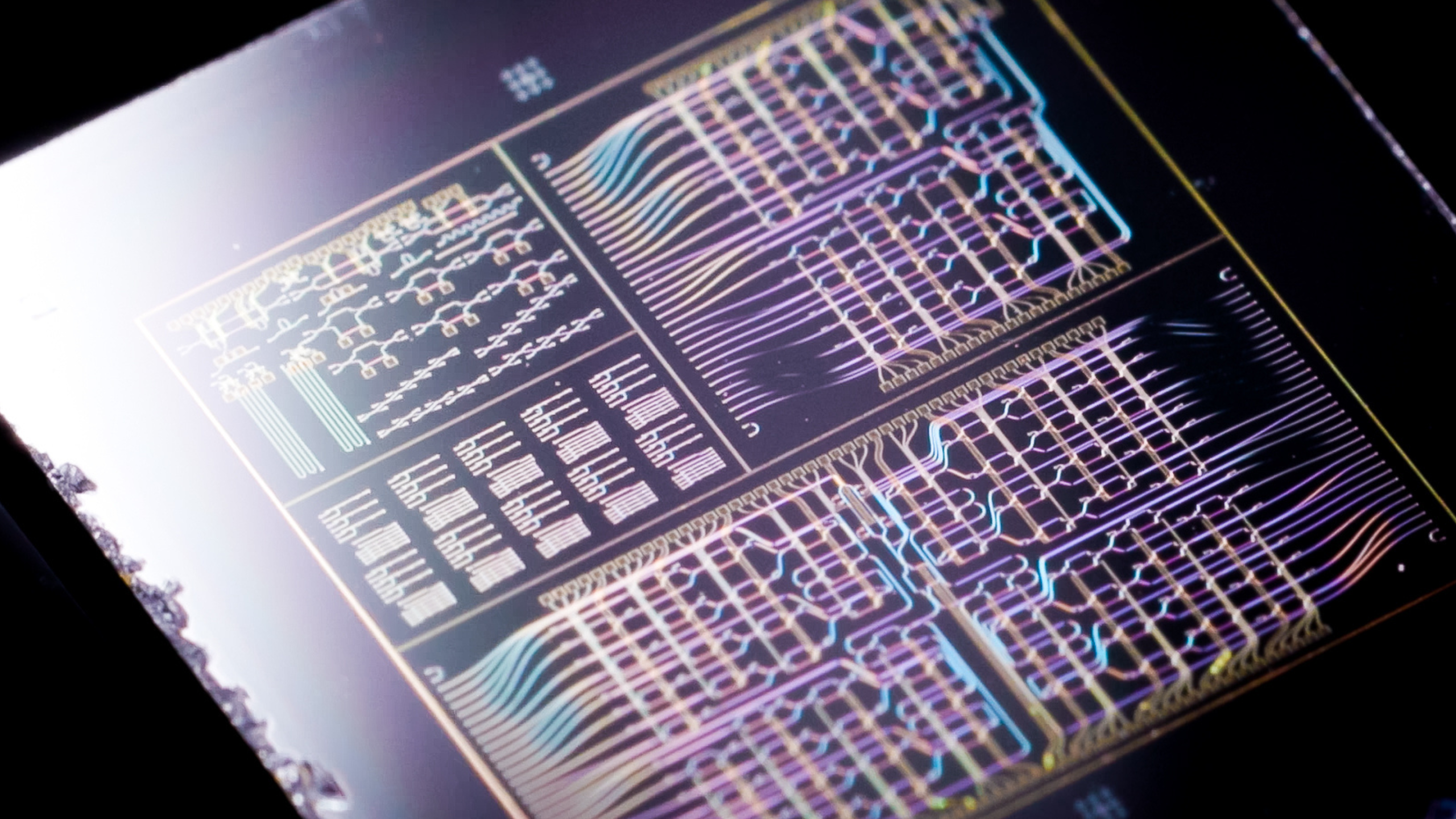
Light helps us understand the universe, connect with each other, track our environment and measure time.
At COMBS, researchers are developing optical microcombs to make these light-based tools smaller, more robust and more accessible.
These microcombs could make the power of optical frequency combs smaller, more robust and more accessible, helping to turn one of the world’s most precise measurement tools into technology that can be used across industry, science and society.
This International Day of Light, we are celebrating not only what light already does for us, but what it could help us discover next.