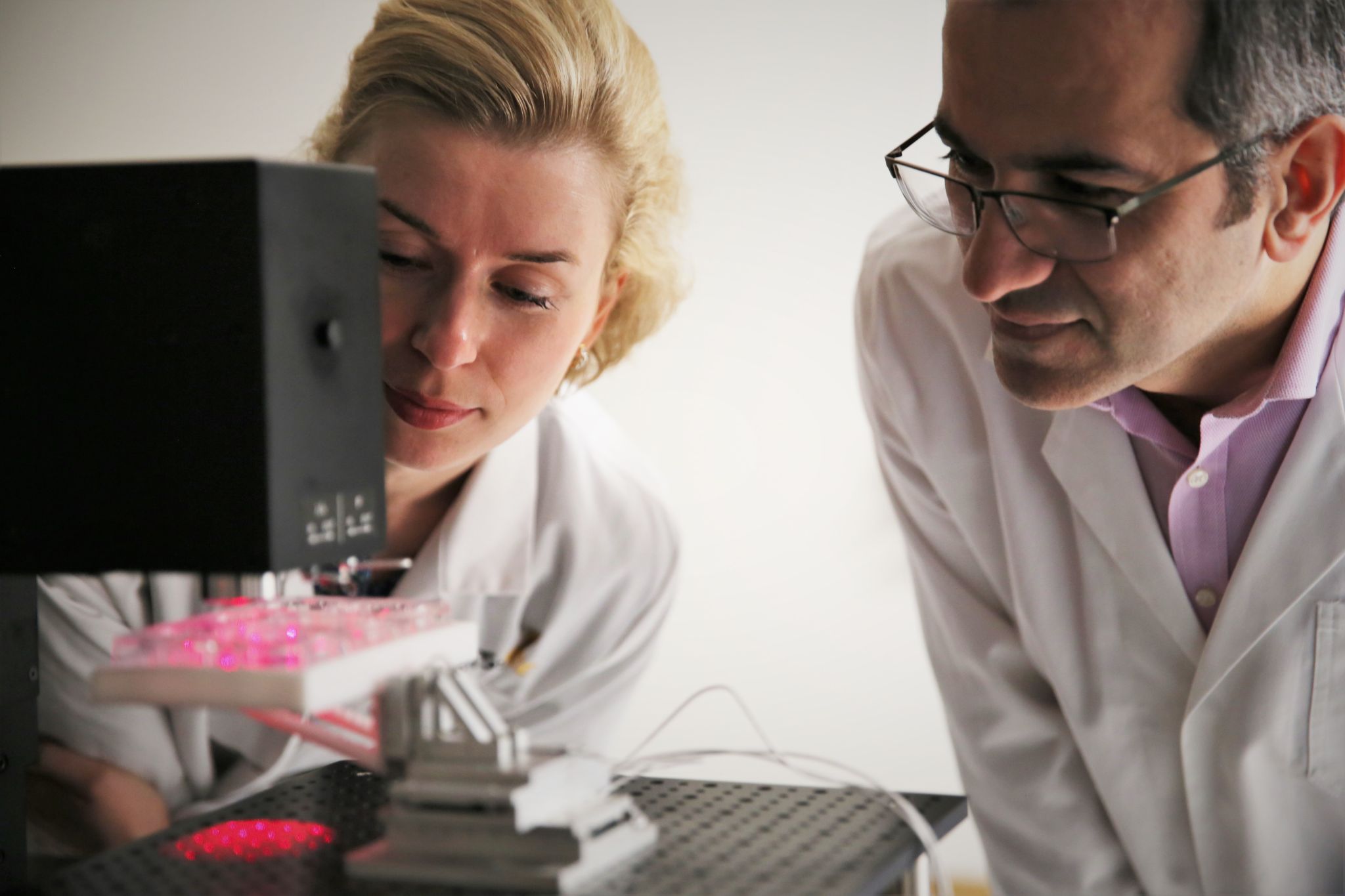
Five surprising things light can do – and how microcombs push it further

Five surprising things light can do – and how microcombs push it further

We use light every day. We see with it. We feel it as heat. We use it to send messages, scan our bodies, study the stars and measure time with extraordinary precision. 

But light does much more than help us read signs, take photos or find our way to the fridge at night.

It carries our internet.
It brings us ancient messages from distant planets.
It helps us see earthquakes in real-time.
It keeps time.
It can even reveal what is happening inside the human body.

At our Australian Research Council Centre of Excellence in Optical Microcombs for Breakthrough Science (COMBS), our researchers are using light in one of its most precise forms: the optical frequency comb.

An optical frequency comb turns one laser into many evenly spaced colours of light. These colours act like the teeth of a comb, creating a precise ruler made from light.

That ruler can be used to measure, transmit and understand the world in new ways.

To celebrate International Day of Light, here are five surprising things light can do – and how our COMBS researchers are using optical microcombs to push them further.

1. The internet travels in optical fibres as light

Every time you scroll, stream, search or send a message, information is racing through optical fibres as pulses of light.

But our internet is growing exponentially at 25% per year – so we need a way to keep up and send more information through the same fibres. One way to do that is to use many colours of light at once, with each colour carrying a different stream of data.

That is where optical microcombs come in.

A microcomb can create many precisely spaced colours from a single laser. Instead of sending information down one lane, it can help create many parallel lanes of light.

Our COMBS researchers and collaborators have already shown how this technology could dramatically increase internet capacity – at the rate of 44 Terabits per second, or the equivalent of sending 1,000 HD movies in a second – through a 76.6 km loop of optical fibre across eastern metropolitan Melbourne.

2. Light can give us clues about planets in other star systems
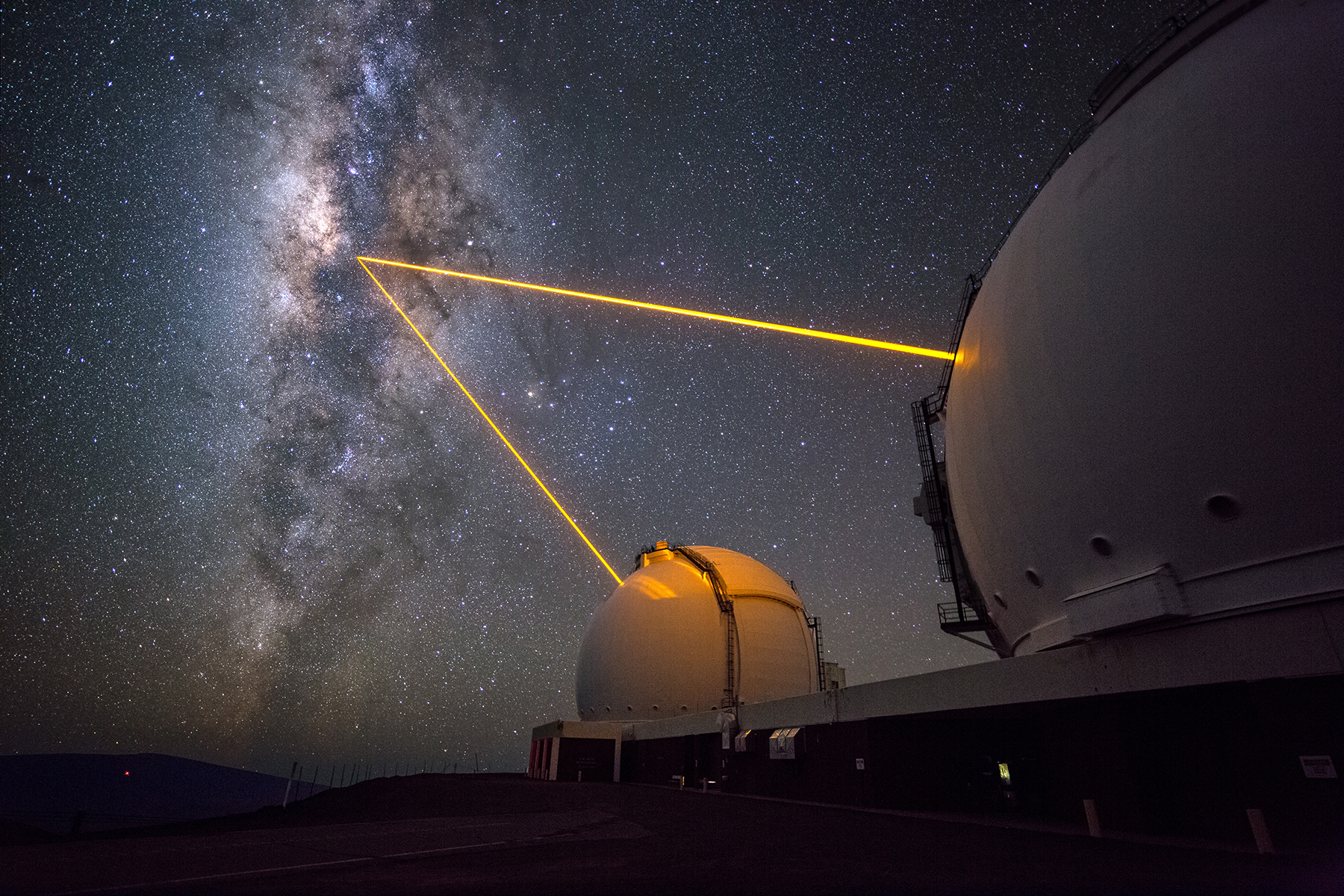
When you look at the night sky, you are looking into the past.

The light we see from the Sun is about eight minutes old.

The light from Proxima Centauri – the nearest star to Earth after the sun – is more than four years old by the time it reaches us.

Astronomers can study the colour of light to learn about planets orbiting distant stars. Tiny shifts in starlight can reveal whether a star is wobbling because a planet is pulling on it.

But those shifts are incredibly small, and go much further back than just four years (in fact, hundreds of millions of years!). To find them, astronomers need extremely precise tools.

Optical frequency combs can act like rulers for light, helping researchers measure tiny changes in starlight. COMBS researchers are working towards more reliable and compact comb technologies that could support the search for Earth-like planets.

3. Lightning can tell you how far away a storm is

You have probably heard the trick for estimating how far away a storm is: count the seconds between seeing lightning and hearing thunder.

Light travels much faster than sound, so we see the lightning before we hear the thunder. The longer the gap, the further away the storm.

That simple trick uses light and time to estimate distance.

Our COMBS researchers are using the same bigger idea – light as a measurement tool – in much more advanced ways.

By sending laser light through optical fibres and measuring how that light changes, researchers can detect vibrations and environmental changes along the fibre. 

This could help track storms, monitor drainage systems and understand how infrastructure responds during extreme weather.

Our hope is that optical frequency combs could make these measurements even more precise.

4. The best clocks do not tick – they use light

Old clocks used swinging pendulums. Modern phones use electronic signals. The most advanced clocks use atoms and light.

Optical atomic clocks measure the vibrations of atoms using light. These vibrations happen fast and can provide an extraordinarily stable way to measure time.

But there is a challenge: optical atomic clocks operate at frequencies far beyond what everyday electronics can easily count.

Optical frequency combs help bridge that gap. They translate the precision of optical clocks into signals we can use.

Optical clocks are the most accurate way to measure a second, and they’re integral to navigation, communications, space exploration and fundamental science.

5. Light can reveal what the eye cannot see
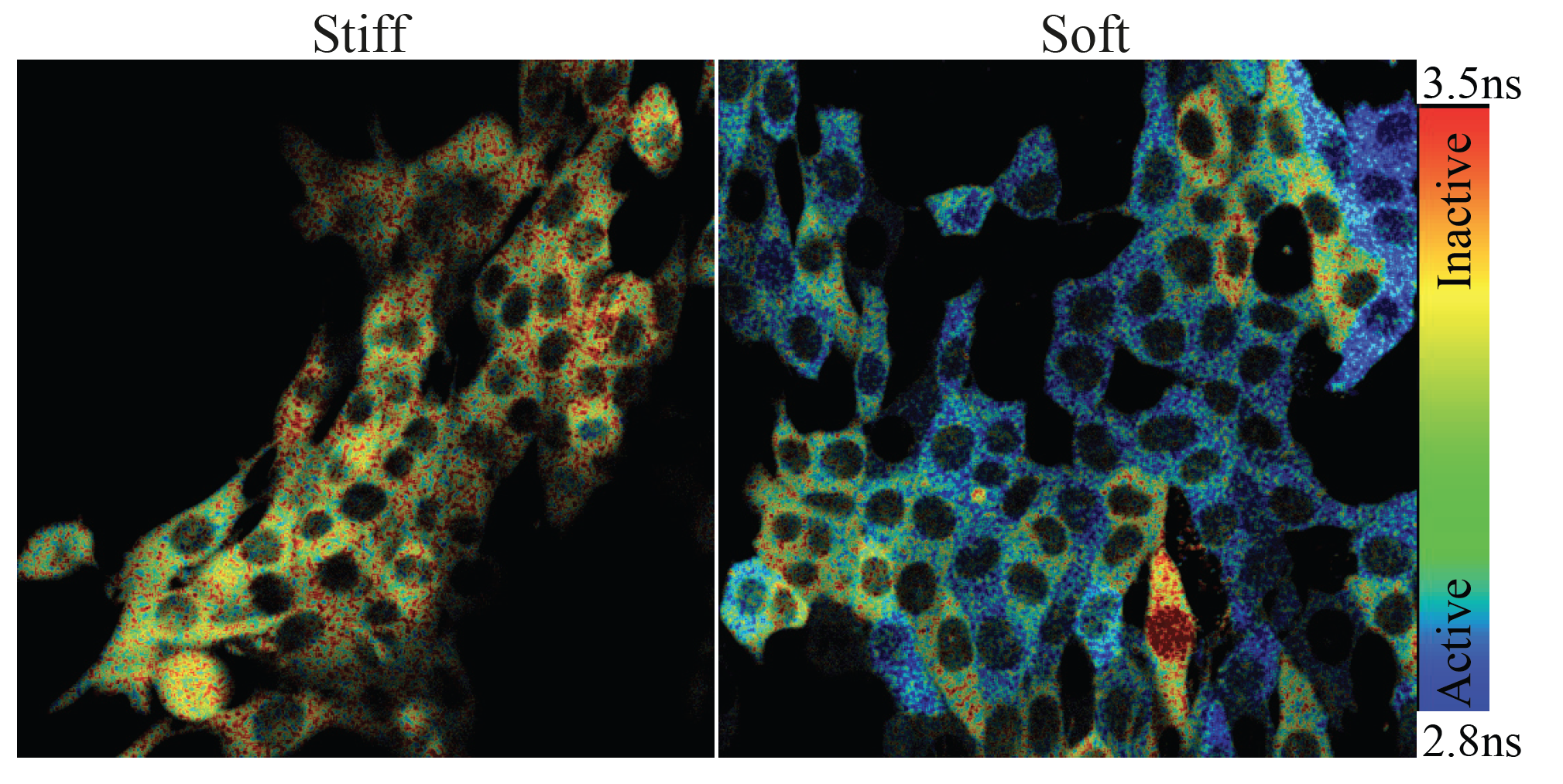
Using Brillouin microscopy to examine tumour tissue.

For centuries, scientists have used light to reveal hidden information about the world.

It can reveal what materials are made of, how chemicals behave and what is happening inside living tissue.

This is the idea behind spectroscopy – or ‘ghost watching’ as it is in Latin – studying how light interacts with matter.

Our COMBS researchers are exploring how advanced light-based tools could improve biomedical imaging, including research into triple-negative breast cancer cells.

With optical microcombs, researchers hope to speed up some imaging and analysis processes, potentially reducing processing times from hours to seconds.

The future of light is being built on a chip
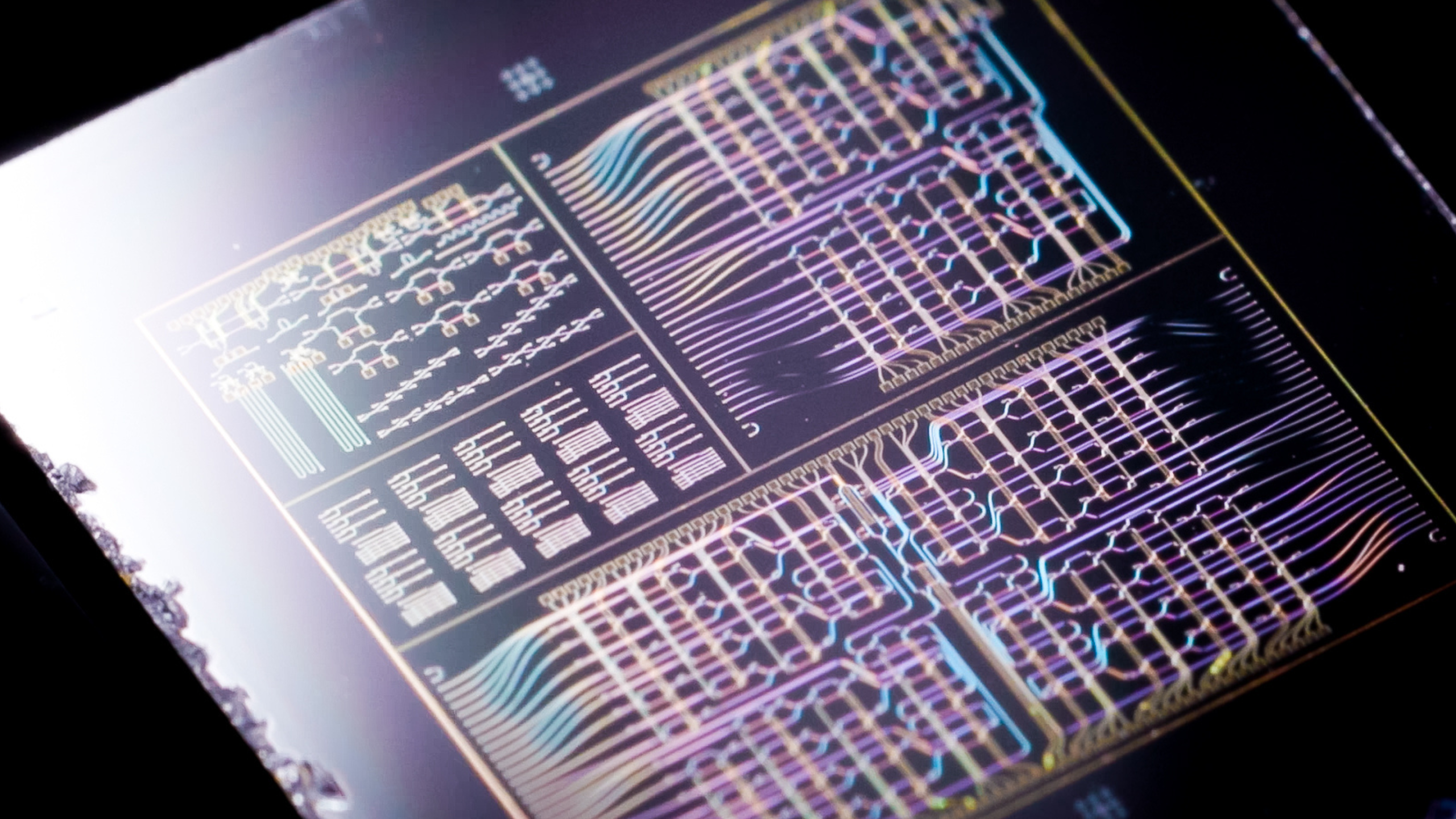
Light helps us understand the universe, connect with each other, track our environment and measure time.

At COMBS, researchers are developing optical microcombs to make these light-based tools smaller, more robust and more accessible.

These microcombs could make the power of optical frequency combs smaller, more robust and more accessible, helping to turn one of the world’s most precise measurement tools into technology that can be used across industry, science and society.

This International Day of Light, we are celebrating not only what light already does for us, but what it could help us discover next.
Adelaide University: Twisted light breakthrough could enable earlier disease detection

Adelaide University: Twisted light breakthrough could enable earlier disease detection

This media release was originally posted to the Adelaide University website. Read the full piece here.


Researchers from the Australian Research Council Centre of Excellence in Optical Microcombs for Breakthrough Science (COMBS) have developed a powerful new way to use light to measure tiny changes in biological fluids such as blood – using samples as small as a millionth of a drop.

The breakthrough, led by teams at Adelaide University, RMIT University and the University of St Andrews (UK), could enable faster and more sensitive medical tests, particularly where only very small sample volumes are available. It could also lead to compact lab-on-a-chip devices capable of analysing tiny biological samples in real-time.

At the heart of the discovery is so-called twisted light – beams that spiral as they travel, just like a corkscrew. This unusual structure gives light a property known as orbital angular momentum, which the researchers measure to probe the physical properties of materials.

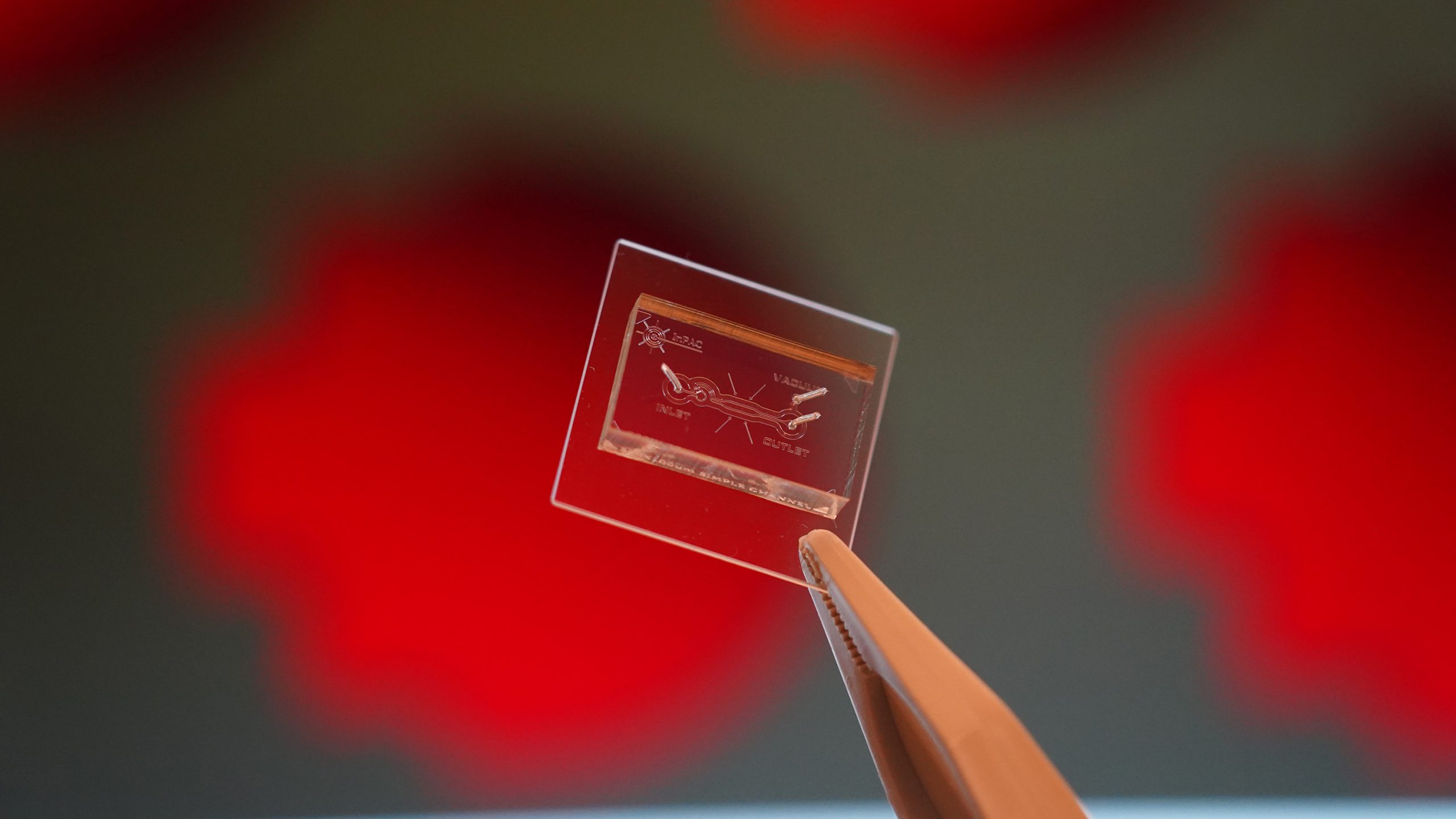
This chip combines microscopic spiral phase plates with a simple microfluidic channel. This tiny “plumbing system” lets us carefully move and control minute amounts of liquid - turning delicate lab structures into practical tools for real-world experiments.

This system was successfully tested on sugar solutions and haemoglobin, a key component of blood, demonstrating its ability to analyse biologically relevant samples and its potential for future medical diagnostics.

Scientists have struggled to measure exactly how much this light is twisting, limiting its usefulness in precision sensing.

That barrier has been overcome through the development of a new approach based on analysing speckle patterns, the grainy interference patterns produced when light scatters through material.

By decoding these patterns, they were able to measure the twist of light with up to 1000 times greater precision than existing methods.

“This gives us a completely new level of control,” said Adelaide University’s Aman Punse who is a Higher Degree by Research Candidate in the School of Biological Sciences.

“We can now detect extremely small changes that were previously invisible.”

The researchers then turned this advance into a practical sensing tool. By generating twisted light inside a microscopic fluid channel, they showed that tiny changes in a liquid, such as its composition, alters how the light twists.

“This allowed us to measure the refractive index – a critical property of light – with better than one part per million accuracy, using extremely small sample volumes,” said Senior author and Director of Adelaide University’s Centre for Light for Life, Professor Kishan Dholakia.

The system was successfully tested on sugar solutions and haemoglobin, a key component of blood, demonstrating its ability to analyse biologically relevant samples and its potential for future medical diagnostics.

The results of the tests were published in the journal Nature Communications.

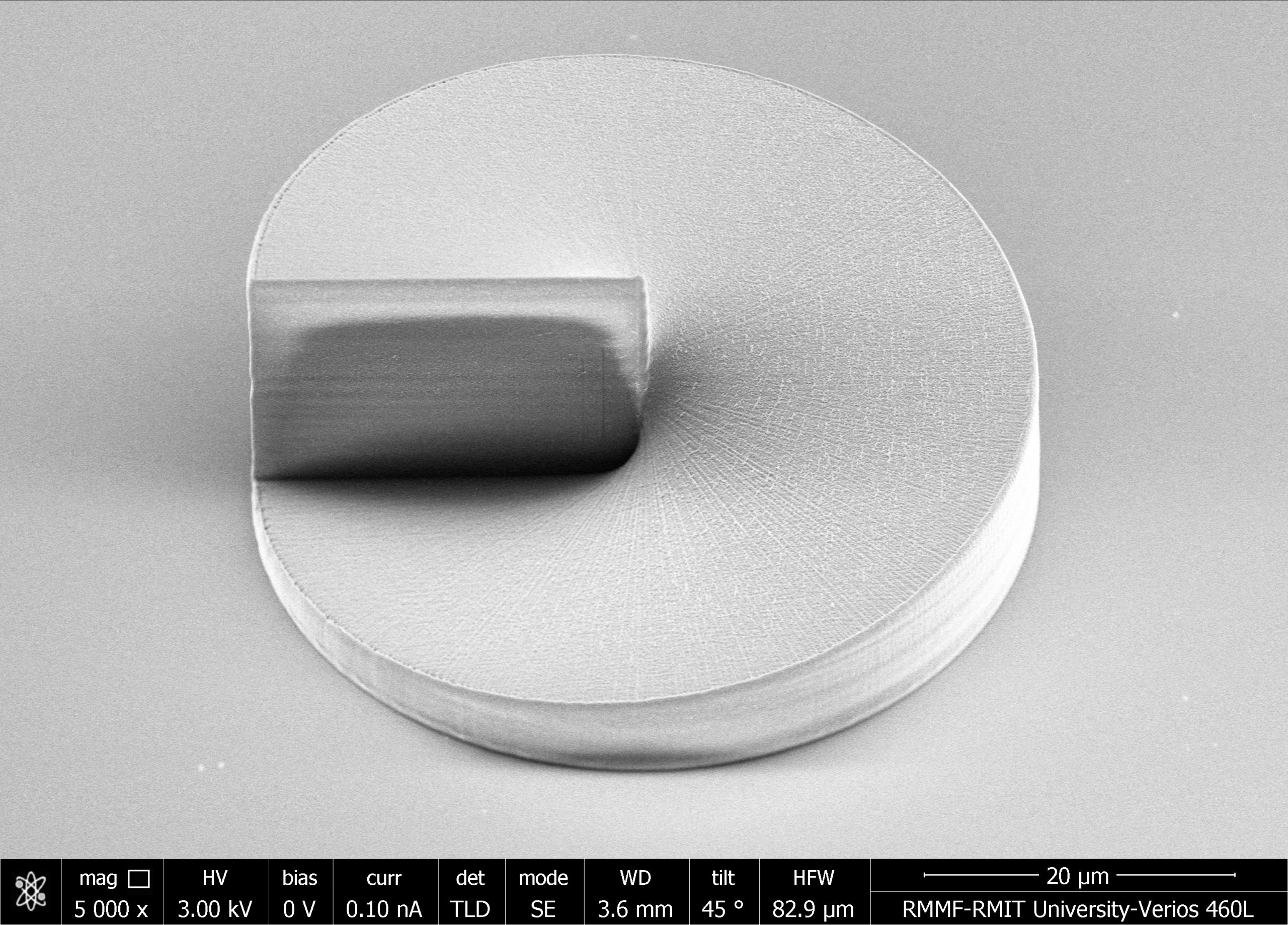
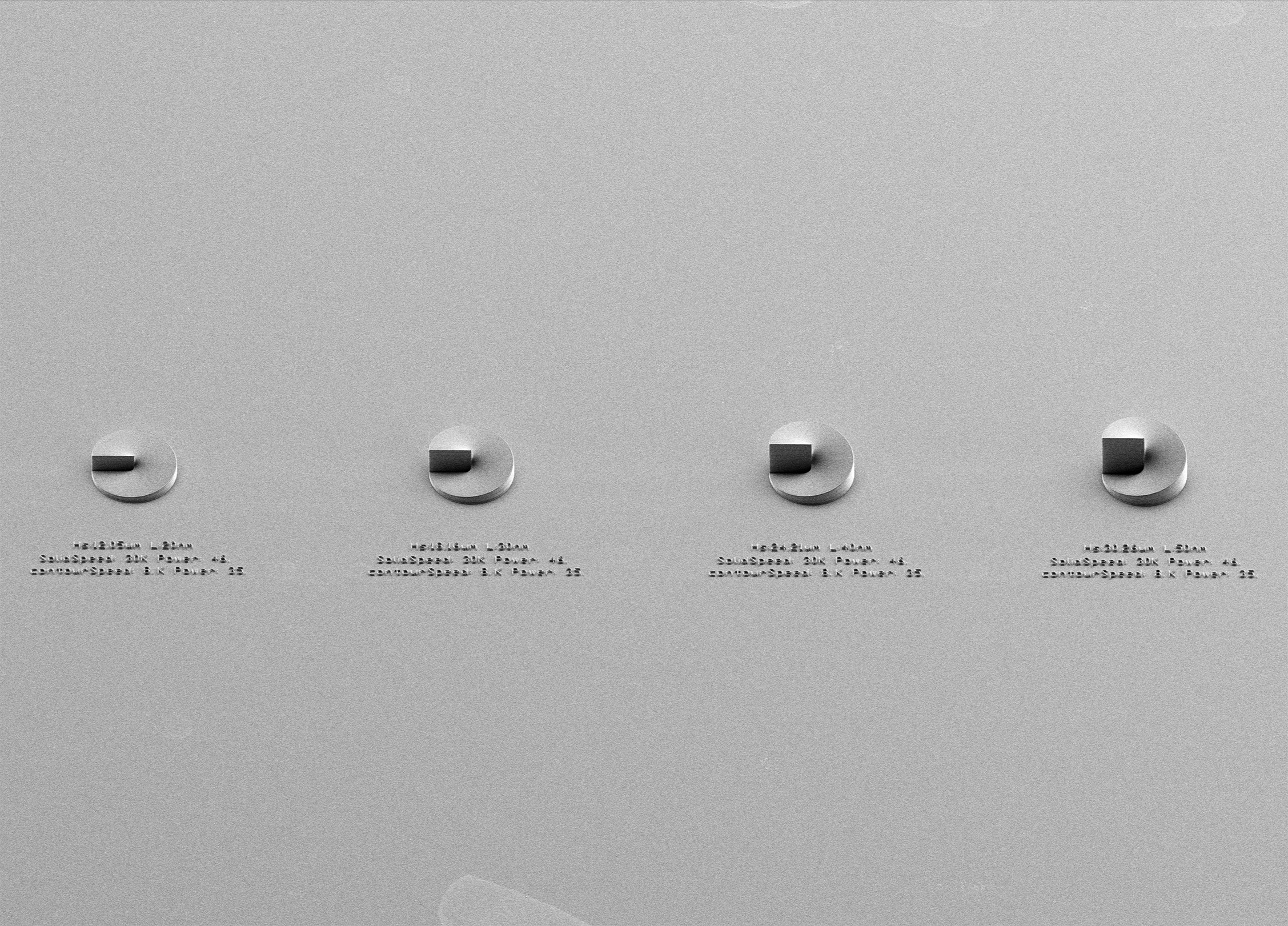
These images taken by a scanning electron microscope reveals a spiral phase plate just 50 microns in diameter - about half the width of a human hair and invisible to the naked eye.

Fabricated using a nanoscale 3D printer, its intricate spiral structure is designed to twist light, enabling new possibilities in imaging, sensing, and next-generation optical technologies.

Professor Dholakia said the work opens up new possibilities for translating advanced optical physics into practical technologies.

“We are very excited about where this research can go next,” he said. “It brings high-precision light-based sensing much closer to real-world applications.”

Precise measurement of liquids underpins everything from disease diagnostics to food safety and advanced manufacturing. But existing techniques often require larger sample volumes or complex instrumentation.

By using twisted light, we have opened the door to faster, earlier diagnosis from just a drop of blood,” said first author Dr Chris Perrella, Adelaide University’s School of Biological Sciences.

“This new method offers a much higher sensitivity with only tiny samples required and the potential for real-time, multi-point measurements, than is currently achievable.”

Future versions of the system could be integrated into compact devices powered by optical frequency combs — laser systems that generate many wavelengths (colours) of light simultaneously — enabling rapid analysis of complex biological samples.

Ultimately, the technology could lead to next-generation point-of-care testing devices, allowing clinicians to analyse blood and other fluids quickly using only minute samples.

Read the full piece here.

Developing consistent standards in biomedical imaging for developmental biology and cancer diagnostics

Developing consistent standards in biomedical imaging for developmental biology and cancer diagnostics

Biomedical imaging at high resolution – without needing extra labels that could affect the sample – is a game changer for developmental biology, cancer diagnostics and ophthalmology.

But the field behind this promise – Brillouin microscopy – still lacks standardised practices, making data hard to compare and interpret across studies and different labs.

COMBS researchers Prof Irina Kabakova and Dr Hadi Mahmodi, together with many world-leading Brillouin microscopy specialists, published a consensus statement in Nature Photonics that set out to change that. It’s a major step toward consistency, clinical translation, and real-world impact.

Read the article in Nature Photonics.

Cosmos article: ‘Combing your breath’: next step in medical diagnostics is closer

Cosmos article: ‘Combing your breath’: next step in medical diagnostics is closer

This article was written by Imma Perfetto, Science Journalist at Cosmos Magazine. Read the full article here.

Imagine standing in your kitchen at home, feeling a little off colour. You grab a handheld device from the medicine cabinet and breathe into it, looking for an instant diagnosis of whatever you’re coming down with.

Such a machine is being developed right now, using technology called optical frequency combs. Or just combs.

“You could imagine it in your phone,” suggests Dr Sarah Scholten, a researcher at the University of Adelaide’s Institute for Photonics and Advanced Sensing in Australia.

“Maybe you’re having a phone call, or you’re scrolling through TikTok, you’re breathing on it, and it says, ‘hey, you’ve got the markers for the flu, you should go to the doctor.’”

Perhaps the device could be used by a doctor to track their patient’s health in remote areas that do not have access to state-of-the-art facilities, or without the need for invasive procedures.

In time-sensitive situations, it could reveal the identity of an infectious disease so it could be treated immediately, or whether a sportsperson has dabbled in doping.

Scholten and her colleagues are working to make these dreams a medical reality.

Read the full story here.

Optical frequency comb experiment to analyse baker’s yeast.

A technological revolution is coming: will we be ready?

A technological revolution is coming: will we be ready?

A photonic chip, like an electronic chip, but instead of being filled with electricity, it's filled with light.

This article was originally published in The Australian and New Zealand Optical Society (ANZOS) May Newsletter.


We are on the cusp of a revolution in the semiconductor industry 

Integrated electronic chips are everywhere – from our computers and smart phones to our washing machines and cars. They are tiny, reliable and often very energy efficient. They do all this while being mind-bogglingly complex on the inside, yet remain cheap and accessible to just about everyone. In short, they are the basis of the most sophisticated industry we have ever known.   

Integrated photonic chips – those that use light instead of electricity – have been researched for decades with the hope that we could achieve the same benefits for optical systems. For some time now, these have been scientifically and technologically feasible. However, while there are many important applications for photonic chips, no single application has needed them so badly to justify the massive investment to make them an industrial reality.  

Until now.  

A new era: Electronics and photonics made to work together 

The internet is continuing to grow exponentially and now every user of the internet is demanding access to AI tools. This is putting enormous pressure on our data centres. The electronic chips are keeping pace – growing exponentially in complexity and capacity on the inside – but using traditional wires to get information into and out of the chips is too slow and inefficient. The only way to interface the next generation of electronic chips is with light. For this reason, the electronics industry is finally taking photonics seriously. Electronics needs photonics to keep growing.  

Over the last year, companies like Intel and Cisco have begun working with mainstream manufacturers like Global Foundries to make chips with both photonics and electronics on them. These hybrid integrated photonic/electronic chips are just hitting the market.  

We are on the cusp of a revolution in the semiconductor industry – low-cost, complex photonic systems that can be mass-manufactured are coming. But could they do more than just act as gateways to connect electronics to the outside world? What other opportunities could photonic chips unlock?  

Unlocking the world’s most precise measurement tool for real-world applications 

If there was a global manufacturing pipeline for photonic chips, we could realise low-cost and readily accessible optical systems that enable self-driving cars to see, help drones navigate and even check if fruit is ripe before harvesting.  

We believe that one particular transformational opportunity for photonic chips lies in the optical frequency comb.  

The optical frequency comb, the most precise measurement tool ever created, is poised to have a significant impact in various fields. This device was invented about 20 years ago and enabled highly accurate measurement of laser light frequency, surpassing electronic methods by many orders of magnitude. This breakthrough has led to significant advancements, including precise timing, mapping and navigation, and the search for Earth-like planets around sun-like stars. 

But its potential still hasn’t been fully realised. 

Despite being an extraordinary scientific instrument, the optical frequency comb’s real-world impact has been limited by its size, complexity and cost. This is because each comb is a complex system requiring a vast array of different optical components and highly sophisticated analogue and digital electronics – typically the size of a suitcase and with a six-figure price tag. 

The optical frequency comb (the world’s most precise measurement tool) remains too bulky, complex and expensive to be accessible for real-world applications. (Our COMBS Science Communicator Rachael Vorwerk is here for scale!).

Making the world’s most accurate measurement tool accessible to all  

The coming photonic chip revolution presents a solution. It will soon be possible to integrate all the elements of an optical frequency comb onto a single chip, including the photonics, analogue and digital electronics. And it will be done in a way that can scale to low-cost mass manufacture.  

These integrated optical frequency combs – called microcombs – will put precision measurement systems in the hands of almost everyone – in a form factor similar to that of a mobile phone. 

By leading the way in exploring the potential of photonic chip microcombs, we can ride this wave to achieve scientific breakthroughs and lay the foundation for new tech industries in Australia and New Zealand with global reach.  

What new technologies might be possible with such ubiquitous precision? Our Australian Research Council Centre of Excellence in Optical Microcombs for Breakthrough Science (COMBS) is on a quest to find out!    

Stay in touch 

We will be contributing regularly to ANZOS News with stories showing the capabilities and potential of microcombs spanning an extraordinary range of end-use scenarios. We look forward to sharing our progress with you.  

We are building our Centre, and are currently hiring both Postdocs and PhD students. Follow us on LinkedIn to see our latest available positions. 


The Australian and New Zealand Optical Society (ANZOS) is a non-profit organisation for the advancement of optics in Australia and New Zealand. Consider joining the society here https://optics.org.au/join-us

Our team at the ARC Centre of Excellence in Optical Microcombs for Breakthrough Science (COMBS), aiming to make optical frequency comb technology as cheap, readily available and accessible as today’s consumer electronics.

International Day of Light: What could life be like in the year 2031?

International Day of Light: What could life be like in the year 2031?

Drones hovering over orchards detecting whether fruit is ripe - what could life be like in seven years thanks to our Centre?

Breath tests for disease detection and an alternative to GPS – we asked our researchers to predict the impact of their work in seven years this International Day of Light!

Just as our computers have become smarter, smaller and cheaper over time thanks to integrated circuit or ‘microchip’ technology, what could we achieve if we integrated the world’s most accurate measurement tool?

What impact do we imagine our Centre will have in seven years? We asked our researchers to predict the impact of their work by 2031.

Inaugural COMBS Workshop at Cape Schanck

Inaugural COMBS Workshop at Cape Schanck

COMBS Workshop 2024

Four days, 75 attendees, and more than 50 presentations – our inaugural COMBS 2024 Workshop last week spanned topics as diverse as astronomy, fundamental physics, earthquake monitoring, medical diagnostic tools, and internet infrastructure.

Our team members discussed the research areas where we think optical frequency combs can have major impact:

  • watching earthquakes (and Taylor Swift concerts!) with optical fibres
  • turbo-charging the internet
  • exploring new ways to understand how the cells in our bodies work
  • discovering earth-like planets in distant star systems

A key part also included curiosity driven fundamental physics to help enable all these applications.

Our Workshop brought together people from academia and industry from all over the world including France, Hawaii, Denmark and New Zealand as well as all eight of our nodes in Australia.

We also refined our common vision for the potential of photonic chip frequency combs over the next decade, and finalised our near term plans for achieving that vision.

Evan Diamandikos Best Poster Award
(For COMBS 2024 Workshop)

Congratulations to our COMBS PhD student, Evan Diamandikos, for winning the Best Poster Award at the COMBS Workshop for his work that aims to improve the signal readout for point-of-care biosensors which can be compacted onto a tiny chip the size of a fingernail, making them a promising alternative to more bulky and restrictive diagnostic tools commonly used today.

Voonhui Lai Best Poster Award
(For Science Communication)

Congratulations to our Associate Investigator Voonhui Lai for winning the Best Poster Award for Science Communication. Voon’s work aims to understand how we can measure earthquakes more accurately by repurposing the same optical fibres we use for our internet as earth-motion sensors.

Celebrating our women at COMBS

Celebrating our women at COMBS

International Women's Day 2024

From using our fibre networks to monitor earthquakes, making optical fibres in space, and using laser light to detect diseases from our breath before there are any symptoms – this International Women’s Day – and our first since the commencement of the ARC Centre of Excellence in Optical Microcombs for Breakthrough Science (COMBS) – I am so pleased to be celebrating the amazing research being led by the women in our Centre.

I’d encourage you to follow these outstanding researchers to find out more about their amazing work and how we are working together to achieve our COMBS vision.

Our Chief Investigators: Meghan S. MillerJean BrodieIrina KabakovaBaohua Jia and Heike Ebendorff-Heidepriem.

Our Associate Investigators: Dawn TanAmanda BerryBao Yue ZhangBlanca del Rosal RabesVoonhui Lai and Sarah Scholten.

Our Partner Investigators: Andrea Blanco RedondoAleksandra FoltynowiczChristelle MonatVictoria ColemanNina Lioznov and Alessia Pasquazi.

Our Centre Team: Nicci CoadRachael Vorwerk and Angela G.

Improving Equity Diversity and Inclusion (EDI) in STEM is a major objective of our centre. We have established our EDI Committee (co-chaired by Sumeet Walia and Heike Ebendorff-Heidepriem), and have defined and are now using recruitment guidelines following best practice. We have pretty good balance in many areas of the Centre but (as is often the case) there is work to be done for our more senior roles. I believe it is particularly important to use our COMBS as a platform to help create more senior and ongoing roles for Women in STEM at our university nodes. We are grateful to be able to follow the pioneering and highly effective work of ASTRO 3D – ARC Centre of Excellence for All Sky Astrophysics in 3 Dimensions (we hope we can do as well as you have!).

We also want to try new things over the lifetime of the Centre, learn what works and what doesn’t, and advance the frontier in EDI and particularly for Women in STEM. (If you have any ideas or want to get involved, feel free to reach out – we would love to learn more!).

  • Astrocombs
  • Information and Intelligence
  • Microcomb Science and Technology
  • Sensing and Measurement
  • Spectroscopy and Microscopy

New research centre to bring world’s best measuring device out of the lab

New research centre to bring world’s best measuring device out of the lab

  • Astrocombs
  • Information and Intelligence
  • Microcomb Science and Technology
  • Sensing and Measurement
  • Spectroscopy and Microscopy
The multi-disciplinary COMBS team includes world-leading experts from eight Australian universities (ANU, Monash, Swinburne, UTS, UniSA, Adelaide and Sydney) and 23 global partner organisations including The Garvan Institute, Advanced Navigation and the National Measurement Institute.

A collaborative research centre of excellence will develop ultra-precise measuring devices that could enable high-speed internet, better medical screening technologies and carbon emissions monitoring.

RMIT University will lead a consortium of universities and industry partners in the new $72 million ARC Centre of Excellence in Optical Microcombs for Breakthrough Science (COMBS), announced today by the Australian Research Council.

They will focus on bringing optical frequency comb technology – which translates electronic signals into light waves for high precision measurement – out of the lab and into a wide range of real-world applications.

Centre Director, RMIT Distinguished Professor Arnan Mitchell, said it was a major milestone in the growing momentum of optical frequency comb technology.

“A photonic chip industry has finally emerged and the unique technology it produces will transform many fields of science,” he said.

“After so much hard work by so many people, the stars are finally aligning.”

Continue reading the full article on the RMIT website: www.rmit.edu.au/news/all-news/2022/nov/combs-centre-of-excellence